By Jane Gregorie, M.S., L.Ac., FABORM
Owner & Clinic Director
Introduction
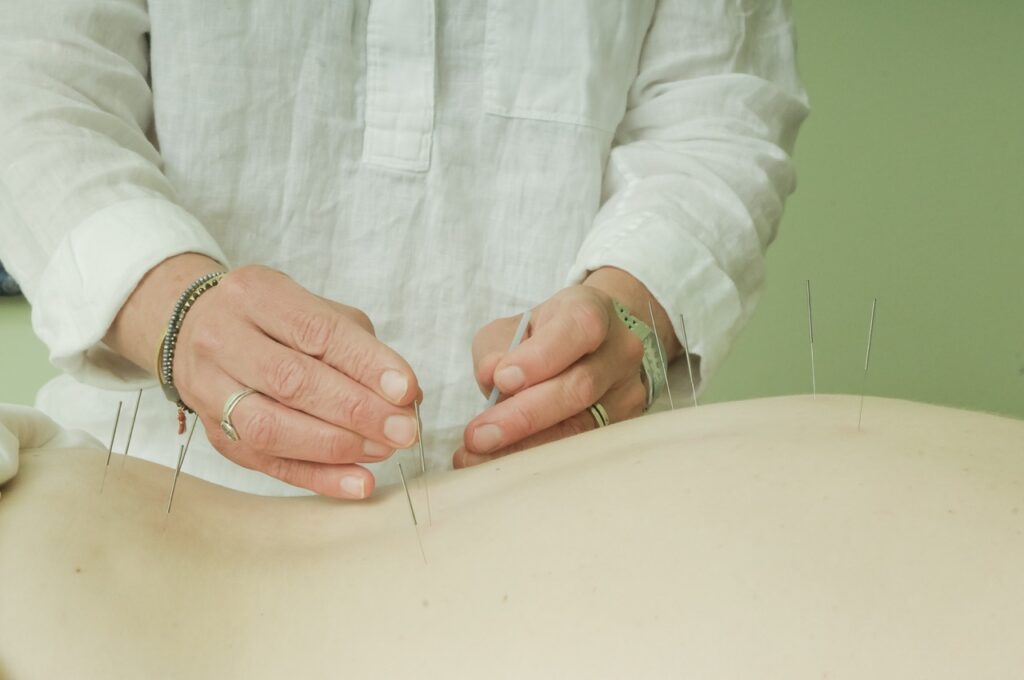
If you are heading into an IVF cycle, one of the most important — and least discussed — questions is when to do the acupuncture. Most patients ask about the transfer day (the classic “Paulus protocol”), and that matters. But the phase where the acupuncture evidence is genuinely strongest, and the phase where the biology is most responsive to integrative support, is the stimulation phase: the 8–14 days of gonadotropin injections leading up to egg retrieval.
This is the phase where your follicles are actively growing, your ovarian blood flow is being asked to work harder than usual, and — because stim-day biology is a compressed window — where an integrative protocol can measurably shift the yield and quality of the eggs you retrieve.
At Acupuncture Denver, IVF stimulation support is one of the most common referrals we get from Denver-area reproductive endocrinologists. This post walks through:
- What the IVF stimulation phase actually is — protocols, medications, monitoring
- Where the RCT evidence is strongest for acupuncture in IVF, and why that’s during stim (not after)
- How red light therapy fits alongside acupuncture during this phase
- A day-by-day integrative plan for stim
- What a personalized protocol looks like in our clinic
If you are also considering red light therapy or want the wider integrative framework, see our companion posts on red light therapy for fertility and The Four Pillars of Integrative Fertility Care.
What Is the IVF Stimulation Phase?
The IVF stimulation phase — also called controlled ovarian hyperstimulation (COH) — is the period during an IVF cycle when you take injectable gonadotropin medications (FSH and often LH) to grow multiple follicles simultaneously, rather than the single dominant follicle a natural cycle produces.
The typical timeline
- Baseline monitoring — cycle day 2–3 ultrasound + estradiol, sometimes progesterone
- Stim starts — usually cycle day 2 or 3, with daily subcutaneous injections
- Monitoring appointments — every 2–3 days, then daily near the end: ultrasound + estradiol
- Antagonist added (Cetrotide or Ganirelix) once follicles reach ~12–14 mm, to prevent premature ovulation
- Trigger shot (hCG, Lupron, or dual trigger) when 2+ follicles reach ~18 mm
- Egg retrieval ~36 hours after trigger
Total stim length is typically 8–14 days, with retrieval usually on cycle days 10–16.
The medications you’re likely on
- FSH (Gonal-F, Follistim, Rekovelle) — drives follicular growth
- hMG (Menopur) — provides both FSH and LH activity, often added midway
- Antagonist (Cetrotide, Ganirelix) — blocks premature LH surge
- Trigger — hCG (Ovidrel, Pregnyl), Lupron (in an antagonist cycle), or dual trigger
- Sometimes: low-dose growth hormone, testosterone patches, DHEA priming (started before stim)
Different clinics use different protocols — long agonist, antagonist, microdose flare, mini-stim, luteal-phase stim, dual stim (DuoStim), and others. The antagonist protocol is the most common in the U.S.; alternatives are chosen based on your age, AMH, prior cycle response, or diagnosis.
What monitoring is looking for
- Follicle growth trajectory (both count and size on each monitoring ultrasound)
- Serum estradiol (typically 200–400 pg/mL per mature follicle at trigger)
- Antral follicle count → follicles > 10 mm → mature follicles
- Uterine lining in the background (secondary in fresh transfer; primary in FET planning)
Where the RCT Evidence for Acupuncture Is Strongest: During Stim
This is worth pausing on, because it flips a common assumption.
The most-cited acupuncture-and-IVF study is the Paulus 2002 pre-and-post-transfer RCT (Paulus et al., 2002, Fertility and Sterility), which found clinical pregnancy rates rose from 26% to 43% with acupuncture on transfer day. That study — combined with the follow-up Manheimer 2008 BMJ meta-analysis of 7 RCTs and 1,366 patients (Manheimer et al., 2008, BMJ) — is what put acupuncture on the fertility map.
But the more recent, larger, and more nuanced evidence points to a different timing conclusion: the pregnancy-rate signal is strongest when acupuncture is done during the stimulation phase itself.
The 2024 timing meta-analysis
A 2024 systematic review and meta-analysis in the Journal of Integrative and Complementary Medicine pooled 38 randomized controlled trials with 5,991 participants and analyzed acupuncture by timing within the IVF cycle. The headline finding:
Acupuncture performed during controlled ovarian hyperstimulation (COH) significantly increased clinical pregnancy rate (RR 1.33; 95% CI 1.07–1.65; p = 0.01). Acupuncture given only before COH, or only on the day of embryo transfer, did not produce the same benefit (Wang et al., 2024, J Integr Complement Med).
That is a substantial reframing of the classic “transfer-day is what matters” idea.
The 2025 timing network meta-analysis
A 2025 network meta-analysis in Frontiers in Endocrinology looked at different acupuncture treatment schedules for ART and confirmed that acupuncture as an ART adjunct improved outcomes overall (RR 1.26 for CPR; RR 1.10 for LBR), with stim-phase acupuncture ranked among the top timings alongside the embryo-culture window (Frontiers in Endocrinology, 2025).
The larger IVF acupuncture meta-analysis (2024)
For the broader picture — not stim-specific but relevant for IVF outcomes — Xu, Zhu, & Zheng (2024) pooled 25 RCTs and 4,757 participants in Archives of Gynecology and Obstetrics: clinical pregnancy rate 43.6% vs 33.2% and live birth rate 38.0% vs 28.7% with acupuncture as an IVF adjunct (Xu et al., 2024).
Dose matters
Multiple reviews now converge on the same finding: longer treatment courses (≥3 months) and higher total session counts (≥20 sessions) produce better outcomes than short-course, cycle-only protocols. This is why we recommend a runway well before stim starts, not just showing up during the injection window.
Safety
Importantly, acupuncture during stim has not been shown to increase ovarian hyperstimulation syndrome (OHSS) risk — the safety profile is reassuring (Wang et al., 2024, J Integr Complement Med).
Bottom line on evidence: the strongest RCT signal in the IVF-acupuncture literature is for acupuncture during stimulation. Transfer-day acupuncture remains defensible (and we still do it), but the stim phase is where the biology is most responsive.
How Acupuncture May Help During Stim (Biological Perspective)
Six converging mechanisms make the stim phase the highest-leverage window for integrative support.
1. Ovarian Blood Flow — The Foundational Mechanism
Follicular growth is exquisitely dependent on blood flow. Stener-Victorin’s classic electroacupuncture and uterine artery Doppler studies demonstrated that low-frequency EA measurably reduces uterine and ovarian artery pulsatility and resistance — meaning better perfusion (Stener-Victorin et al., 1996, Human Reproduction).
During stim, ovaries are being asked to grow 10–20+ follicles instead of 1, so blood-flow demand is dramatically elevated. This is exactly the phase where the acupuncture-blood-flow mechanism most directly translates to clinical benefit — better follicular development, more mature oocytes, and a better ovarian environment for oocyte quality.
2. Mitochondrial Function and Egg Quality
Oocyte quality is a mitochondrial story. Mature eggs have among the highest mitochondrial density of any human cell, and their capacity to complete a clean meiotic division — one of the most metabolically demanding events in biology — depends on ATP production and low oxidative stress.
Acupuncture supports oocyte mitochondrial function through improved blood flow (oxygen and substrate delivery) and reduced oxidative stress via anti-inflammatory pathways. This mechanism is where red light therapy overlaps directly — more on that in a moment.
3. Nervous-System Regulation and Cortisol Reduction
Stim is a high-stress phase for most patients. Daily injections, frequent monitoring, financial pressure, uncertainty about response — the sympathetic-tone load is real. Chronic sympathetic activation constricts ovarian vessels and elevates cortisol, both of which work against the stim protocol.
Acupuncture reliably shifts autonomic balance toward parasympathetic tone, lowers cortisol, and improves sleep during the stim window — creating a physiologic environment more conducive to ovarian response. See our stress and fertility post for the underlying evidence.
4. Reducing Cycle Cancellation and Improving Response in Poor Responders
For patients with diminished ovarian reserve or a history of poor response, integrative preparation during stim has particular value. A 2020 systematic review in Journal of Integrative Medicine included 3 RCTs of acupuncture in poor responders and reported directional improvements in clinical pregnancy rate favoring the acupuncture arm; the individual-trial figures ranged widely, with one included trial reporting CPR of approximately 37.8% in the acupuncture group vs 24.3% in controls (2020 systematic review, PubMed 32322482). The overall pooled data is preliminary; more RCTs are needed.
A 2026 network meta-analysis in Medicine of 15 RCTs and 1,195 women examining different acupuncture modalities during stim found:
- Transcutaneous electrical acupoint stimulation (TEAS) was superior for number of oocytes retrieved and antral follicle count
- All acupuncture methods (TEAS, electroacupuncture, and manual acupuncture) were safe
This suggests that different modalities may target different aspects of ovarian response — and combining them is often the right clinical answer.
5. Endometrial Preparation
Even in fresh transfer cycles (where transfer follows retrieval), and in FET cycles (where the lining is built separately), the stim phase indirectly shapes the endometrial environment through estradiol dose-response, blood flow, and inflammatory state. Acupuncture supports each of these — see our thin endometrial lining post for a fuller treatment of this pathway.
6. Immune and Inflammatory Modulation
Follicular fluid inflammation and pelvic inflammatory tone affect oocyte and embryo quality. Acupuncture’s vagal-nerve-mediated cholinergic anti-inflammatory pathway supports a lower inflammatory baseline during stim.
Red Light Therapy During Stim: What the Evidence Shows
Red light therapy — also called photobiomodulation or low-level laser therapy (LLLT) — uses red (630–660 nm) and near-infrared (810–850 nm) wavelengths that penetrate tissue and are absorbed by cytochrome c oxidase in mitochondria, boosting ATP production. In ovarian tissue during stim, that mitochondrial support is directly relevant to egg quality.
The evidence
The red-light evidence base is smaller and more heterogeneous than for acupuncture, but the mechanism is well-established and the human data is encouraging.
The most-cited work is Ohshiro (2012) in Laser Therapy — a case series of poor-responder Japanese women (mean age 39) with previous failed IVF cycles who received near-infrared light on the head and abdomen. Reported outcomes: 22.3% pregnancy rate (156 of 701 cases) and 50.1% live delivery rate among those pregnancies — both encouraging in a poor-responder population where standard IVF outcomes are typically much lower (Ohshiro, 2012, Laser Therapy).
Additional mechanistic evidence supports photobiomodulation’s ability to improve oocyte mitochondrial membrane potential and reduce oxidative stress in animal models, with human translation still an active research area. Larger RCTs are still needed — we use red light as a reasonable adjunct, particularly in poor-responder and advanced-maternal-age cycles, not as a stand-alone.
Our stim-phase red light protocol
| Parameter | Protocol |
|---|---|
| Wavelengths | Combined red (630–660 nm) + near-infrared (810–850 nm) |
| Placement | Lower abdomen (over the ovaries) as primary; head/neck sometimes as secondary |
| Session length | 15–20 minutes per session (follow device guidance) |
| Frequency during stim | 3–5× per week, ideally daily on high-response days |
| When to start | Ideally 3 months before stim for full 90-day egg-development window; if timeline is shorter, start now |
| When to stop | Stop abdominal placement at trigger. Do not use over the abdomen after retrieval or in confirmed pregnancy |
| Devices we use/recommend | Celluma panels in clinic; Fringe wraps for home use (order code available) |
Safety notes
- Do not use over the abdomen after trigger, during the two-week wait, or in confirmed pregnancy
- Do not shine directly into the eyes; use blocking goggles if provided
- Avoid direct thyroid application unless cleared by your endocrinologist
- Should feel gently warm, not hot
A Day-by-Day Integrative Stim Plan
Every patient is different, but this is the standard rhythm we design for stim-phase patients.
| Stim day | Integrative plan |
|---|---|
| Baseline (CD 2–3) | 1 acupuncture session before stim starts. Red light 5×/week already ongoing (started 3 months ago if timeline allows) |
| Days 1–4 (early stim) | 2× weekly acupuncture. Red light on abdomen 5×/week. Sleep, hydration, protein prioritized |
| Days 5–8 (mid stim) | 2× weekly acupuncture continues. Electroacupuncture emphasized for ovarian blood flow. Red light 5×/week |
| Days 8–12 (late stim) | 1–2 acupuncture sessions the days before trigger. Red light continues until trigger day |
| Trigger day | Optional gentle acupuncture session for nervous-system support. Stop red light on abdomen after trigger |
| Retrieval + 1 day | 1 acupuncture session within 24–48 hours of retrieval for post-procedure recovery |
| After retrieval → transfer | Transitions to the embryo transfer protocol (Paulus pre- and post-transfer if fresh; FET timing if frozen) |
For patients with longer timelines, we strongly recommend starting acupuncture and red light at least 3 months before stim — egg development takes ~90 days, so the eggs retrieved during stim have been maturing for months before the injections begin.
Traditional Chinese Medicine Perspective on Stim Support
In TCM, the stimulation phase is a rapid, forced amplification of Yin, Blood, and Kidney essence — the substances that build follicles. Different patients present with different underlying patterns.
Kidney Yin Deficiency
Associated with:
- shorter cycles, night sweats, dry mucosa
- higher FSH, lower estradiol response
- thin uterine lining risk
- often present with advanced maternal age or DOR
Treatment nourishes Kidney Yin — supports estrogen response and follicular fluid quality.
Kidney Yang Deficiency
Associated with:
- low basal body temperatures, cold extremities
- low LH surge amplitude, weak luteal phase
- fatigue, low libido
Treatment warms Kidney Yang with moxibustion and warming point selections.
Blood Deficiency
Associated with:
- light periods, thin lining risk
- fatigue, pale complexion, dizziness
Treatment nourishes Blood — supports the substrate that builds mature follicles.
Liver Qi Stagnation
Associated with:
- high-stress life, cycle disruption with stress
- premenstrual irritability
- physical tension patterns during stim
Treatment smooths Liver Qi — reduces the sympathetic-tone barrier to good ovarian response.
Phlegm-Damp (PMOS/PCOS pattern)
Associated with:
- high AMH, high AFC, PMOS diagnosis
- OHSS risk factors
Treatment transforms Damp and Phlegm while carefully modulating stim response.
What a Personalized Stim-Phase Plan Looks Like at Acupuncture Denver
- Comprehensive intake — full IVF history, current protocol, medications, prior cycles, AMH, AFC, and any labs
- Coordination with your reproductive endocrinologist — timing points around monitoring appointments and trigger day
- 3-month runway acupuncture if the timeline allows — weekly sessions, with intensification during stim
- 2× weekly acupuncture during stim itself — with electroacupuncture on lower-abdominal and lumbosacral points for ovarian blood flow
- Red light therapy 3–5× per week — 15–20 minutes per session, stopped at trigger
- Custom Chinese herbal formula during runway — with appropriate transitions off blood-moving herbs before and during stim
- Targeted supplements — most commonly ubiquinol (CoQ10) 200–600 mg, vitamin D, omega-3s, prenatal with methylfolate — see our evidence-based fertility supplements post
- Dietary and lifestyle support — high-protein, anti-inflammatory eating; warm cooked meals; adequate sleep; hydration
- Stress and nervous-system regulation — daily breathwork or meditation practice, additional acupuncture around the emotionally loaded days
- Post-retrieval recovery care — 1 acupuncture session within 24–48 hours of retrieval; hydration, electrolytes, and rest guidance
- Transition to transfer protocol — Paulus pre- and post-transfer acupuncture (fresh cycles), or FET-timed protocol (frozen)
When to Start (Timeline)
✔ 3 months before stim is the ideal starting point — egg development takes ~90 days
✔ 6 months for DOR, advanced age, or prior poor response — the runway advantage compounds
✔ 8–12 weeks for red light therapy consistently, 3–5× per week
✔ 2× weekly acupuncture during stim itself
✔ 1 session within 24–48 hours after retrieval
✔ Continue with Paulus protocol at embryo transfer — pre- and post-transfer sessions
If your timeline is shorter — even 4–6 weeks — start now. Some support is meaningfully better than none.
Clinical Insight from Our Practice
At Acupuncture Denver, patients receiving stim-phase integrative care most commonly report:
- calmer emotional baseline through the injection window
- fewer stim-related side effects (bloating, headaches, sleep disruption)
- monitoring ultrasounds that show more even follicular development
- in poor responders: often better-than-projected AFC and retrieved egg counts
- better sleep the night before retrieval
- easier physical recovery in the 48 hours after retrieval
We do not promise outcomes — no one ethically can. But we have watched integrative stim support meaningfully change many patients’ IVF experience, and the RCT evidence is now clear that this is the phase where the biology is most responsive.
Jane, Merry, and Mally are all ABORM board-certified Reproductive Medicine Specialists with over two decades of experience working alongside Denver’s leading reproductive endocrinologists — including on-site FET acupuncture at Conceptions and Kindbody.
Patient Takeaways
If you are heading into IVF stimulation:
✔ The strongest RCT evidence for acupuncture in IVF is during the stim phase, not just on transfer day (Wang et al. 2024: RR 1.33 for CPR during COH; 2025 network meta-analysis: OR 1.71 for CPR, OR 2.41 for LBR)
✔ Longer courses and higher session numbers (≥3 months, ≥20 sessions) yield superior outcomes
✔ Red light therapy is a plausible adjunct — mechanism is well-established, evidence base is smaller than acupuncture but encouraging in poor responders (Ohshiro 2012 case series)
✔ Different acupuncture modalities target different outcomes — TEAS for oocyte count and AFC; MA for mature oocyte count
✔ Acupuncture during stim has not been shown to increase OHSS risk
✔ Start early — a 3-month runway is ideal; even a shorter one is meaningful
✔ Stop red light on the abdomen at trigger — never use in confirmed pregnancy
✔ Coordinate the entire plan with your reproductive endocrinologist
Considering Acupuncture and Red Light Therapy for Your IVF Stimulation Cycle?
If you have an IVF cycle coming up — or are in the middle of a stim cycle now — we would be honored to design a personalized plan around your:
- protocol (antagonist, long agonist, microdose, mini-stim, DuoStim)
- age, AMH, AFC, prior cycle response
- specific TCM pattern
- timeline and RE relationship
👉 Schedule your consultation to build a personalized IVF stimulation plan.
For the broader integrative framework this fits into, see The Four Pillars of Integrative Fertility Care.
Frequently Asked Questions
When is the best time in an IVF cycle to do acupuncture?
The strongest RCT evidence is for acupuncture during the ovarian stimulation phase. A 2024 meta-analysis of 38 RCTs and 5,991 participants in the Journal of Integrative and Complementary Medicine found acupuncture during controlled ovarian hyperstimulation (COH) significantly increased clinical pregnancy rates (RR 1.33; 95% CI 1.07–1.65), while pre-COH or transfer-day-only acupuncture did not produce the same benefit. Transfer-day acupuncture (Paulus protocol) remains defensible and is still part of our standard, but stim is where the biology is most responsive.
How often should I get acupuncture during IVF stimulation?
Our standard is 2× weekly during the 8–14 days of stim, with intensification (daily or every-other-day) around monitoring appointments and the days before trigger. This should ideally be layered on top of a 3-month runway of at least weekly acupuncture before stim starts.
Does red light therapy actually help during IVF stim?
The mechanism (mitochondrial ATP support via cytochrome c oxidase absorption) is well-established, and mechanistic animal data supports improved oocyte mitochondrial function. Human evidence is smaller and more heterogeneous than for acupuncture. Ohshiro’s 2012 case series in poor-responder Japanese women (mean age 39) reported a 22.3% pregnancy rate across 701 cases, with 50.1% of those pregnancies resulting in live delivery — encouraging in a poor-responder population. We use it as a reasonable adjunct, particularly for diminished ovarian reserve and advanced maternal age — larger RCTs are still needed.
When should I stop red light therapy in an IVF cycle?
Stop abdominal red light at trigger — do not use over the abdomen after retrieval, during the two-week wait, or in confirmed pregnancy. If red light is being used for face, neck, or other non-abdominal areas for other reasons (skin, mood, non-fertility purposes), that continues to be safe.
Does acupuncture increase OHSS risk?
No. Multiple meta-analyses have found no increased risk of ovarian hyperstimulation syndrome with acupuncture during stim (Wang et al. 2024: RD −0.03; 95% CI −0.07 to 0.01). This is one of the reassuring safety findings — you are not adding risk by adding acupuncture, and you may be reducing risk indirectly through improved autonomic balance and reduced inflammation.
What if I only have 4 weeks before my stim cycle starts?
Start now anyway. The evidence favors longer runways (≥3 months, ≥20 sessions), but shorter courses still have measurable benefit — particularly on the acute stim-phase mechanisms (blood flow, cortisol reduction, follicular response). We will design a compressed plan around your available time.
Can I use acupuncture with any IVF protocol?
Yes. Acupuncture is safe and defensible with antagonist, long agonist, microdose flare, mini-stim, luteal-phase stim, DuoStim, and natural-cycle IVF protocols. Chinese herbal formulas are more sensitive — we discontinue blood-moving herbs before and during stim and coordinate the herbal protocol carefully with your medications.
What if I have poor ovarian response?
Poor responders may benefit more from integrative preparation than average responders. A 2020 systematic review in Journal of Integrative Medicine of 3 RCTs of acupuncture in poor responders reported directional improvements in CPR favoring the acupuncture arm. A 2026 network meta-analysis in Medicine of 15 RCTs and 1,195 women found TEAS (transcutaneous electrical acupoint stimulation) superior for oocytes retrieved and antral follicle count. If you are a poor responder, we strongly recommend a longer runway (3–6 months) with layered modalities.
What supplements should I take during IVF stim?
Foundational: ubiquinol/CoQ10 (200–600 mg), vitamin D3 (2,000–4,000 IU), omega-3 EPA/DHA (1,000–2,000 mg), prenatal with methylfolate, choline (450 mg), magnesium glycinate. Sometimes NAC and DHEA (for DOR, with RE supervision). See our evidence-based fertility supplements post for evidence tiers, dosing, and cautions.
Is acupuncture safe with all IVF medications?
Yes. Acupuncture has no known interactions with gonadotropins (Gonal-F, Follistim, Menopur, Rekovelle), antagonists (Cetrotide, Ganirelix), agonists (Lupron), triggers (Ovidrel, Pregnyl, dual trigger), or progesterone supplementation. Chinese herbal formulas are screened for interactions, and our practitioners are NCCAOM board-certified in herbology and trained in herb-drug interaction assessment.
References
- Paulus, W. E., Zhang, M., Strehler, E., et al. (2002). Influence of acupuncture on the pregnancy rate in patients who undergo assisted reproduction therapy. Fertility and Sterility, 77(4), 721–724.
- Manheimer, E., Zhang, G., Udoff, L., et al. (2008). Effects of acupuncture on rates of pregnancy and live birth among women undergoing in vitro fertilisation: systematic review and meta-analysis. BMJ, 336(7643), 545–549.
- Wang, X., Xu, H.-M., Wang, Q.-L., et al. (2024). The Timing and Dose Effect of Acupuncture on Pregnancy Outcomes for Infertile Women Undergoing IVF and Embryo Transfer: A Systematic Review and Meta-Analysis. Journal of Integrative and Complementary Medicine.
- (2025). Different effectiveness of acupuncture treatment schedule on ART pregnancy outcomes: a systematic review and network meta-analysis. Frontiers in Endocrinology.
- Xu, M., Zhu, M., & Zheng, C. (2024). Effects of acupuncture on pregnancy outcomes in women undergoing in vitro fertilization: an updated systematic review and meta-analysis. Archives of Gynecology and Obstetrics, 309(3), 775–788.
- Stener-Victorin, E., Waldenström, U., Andersson, S. A., & Wikland, M. (1996). Reduction of blood flow impedance in the uterine arteries of infertile women with electro-acupuncture. Human Reproduction, 11(6), 1314–1317.
- Ohshiro, T. (2012). Personal overview of the application of LLLT in severely infertile Japanese females. Laser Therapy, 21(2), 97–103.
- (2020). Acupuncture for in vitro fertilization in women with poor ovarian response: a systematic review. Journal of Integrative Medicine.
- (2026). Acupuncture in patients with the poor ovarian response on IVF-ET: A systematic review and network meta-analysis. Medicine, 105(5).
- Hamblin, M. R. (2017). Mechanisms and applications of the anti-inflammatory effects of photobiomodulation. AIMS Biophysics, 4(3), 337–361.
Medical disclaimer: This article is for educational purposes only and is not a substitute for personalized medical care. IVF cycles should be planned and supervised by a reproductive endocrinologist. Acupuncture and red light therapy should be provided by licensed practitioners with advanced fertility training, in coordination with your medical team. Do not use red light therapy over the abdomen after trigger, during the two-week wait, or in confirmed pregnancy.