By Jane Gregorie, M.S., L.Ac., FABORM
Owner & Clinic Director
Introduction
If you are trying to conceive in your mid-30s, late-30s, or early-40s, you have likely encountered some version of this conversation: a friend who got pregnant easily at 39, a co-worker who told you she “couldn’t” after 35, fertility statistics that range from reassuring to terrifying depending on which article you read, and the unmistakable feeling that the timeline is now part of the equation.
The truth is more nuanced than either the “you have nothing to worry about” or the “geriatric pregnancy” framing suggests. Age does meaningfully change fertility — but it does not erase it. And there is real evidence that integrative care, including acupuncture for fertility over 35 (and over 40), can support women in this window.
If you are:
- 35–39 and just starting to wonder how much time you have
- 35–39 and have been trying for 6+ months
- 40+ and trying naturally
- 40+ and using IVF or considering it
- in your late 30s after a recurrent loss, an “unexplained infertility” diagnosis, or a recent endometriosis finding
…this guide is for you. At Acupuncture Denver, more than half of our fertility patients are in their late 30s or 40s. We have spent over two decades helping women in exactly this window — naturally, with IUI, with IVF, and with donor eggs. Real outcomes from our patients can be read in our fertility success stories.
What Actually Changes About Fertility After 35?
Three things drive the well-documented age-related decline: egg quantity, egg quality, and uterine receptivity — with egg quality being by far the most important factor in women under 42.
Egg quantity (ovarian reserve)
You were born with all the eggs you will ever have, and the supply naturally declines through your reproductive years. By age 30, the median anti-Müllerian hormone (AMH) level is around 2.5 ng/mL. By 35, the median drops to about 1.4 ng/mL, and by age 36, the median AMH value falls below 1.2 ng/mL — the threshold commonly used to define diminished ovarian reserve (DOR) (Frontiers in Endocrinology, 2025 — AMH nomogram of 22,920 women).
The pace then accelerates: the rate of AMH decline picks up noticeably after age 40. Lab estimates of DOR prevalence rise from about 16% at age 18 to nearly 96% by age 45.
That said — AMH is a quantity marker, not a quality marker, and not a destiny marker. Many women with low AMH conceive naturally; many women with reassuringly “normal” AMH have a harder time than expected. We treat the whole picture, not a number. (See our companion post on acupuncture for low ovarian reserve.)
Egg quality and chromosomal health
This is the most consequential change with age. As eggs sit in a paused state in the ovary for years, the mitochondria inside them — the cellular structures responsible for energy production — accumulate damage. When an egg finally matures and the chromosomes need to separate cleanly, an energy-deficient egg is more likely to make a mistake. The result: more chromosomally abnormal embryos, lower fertilization success, lower implantation rates, and higher miscarriage rates.
By age 40, a majority of a woman’s eggs are chromosomally abnormal — with aneuploidy risk rising approximately tenfold compared to women in their early 30s (Age-Related Fertility Decline — NCBI StatPearls; Frontiers in Cell and Developmental Biology, 2025 review on CoQ10 and oocyte aging). This — not ovarian reserve — is the single biggest driver of age-related fertility decline. It is also the area where lifestyle, supplementation (notably CoQ10), and acupuncture have the most mechanistic plausibility to help.
Per-cycle conception probability
ASRM and ACOG cite the following approximate monthly probabilities of conception for healthy couples with regular intercourse:
- Under 35: ~20–25% per cycle
- 35–39: ~15–19% per cycle
- 40+: ~5% per cycle
- 43+: under 3% per cycle
(ASRM Practice Committee, 2022 — Optimizing natural fertility; ACOG, 2025 — Anticipatory Counseling on Ovarian-Factor Fertility Decline)
Miscarriage rates
The same mitochondrial and chromosomal changes that affect conception also raise miscarriage risk. Compared to women conceiving in their early 30s, women aged 35–39 and 40+ have strongly increased odds of miscarriage (PMC12625503, 2024). If you have already experienced loss, our acupuncture for recurrent pregnancy loss post may be relevant.
When to Get a Fertility Workup
You do not need to wait a full year. The American Society for Reproductive Medicine recommends:
- Age ≤ 35: evaluation after 12 months of trying without conception
- Age 36–40: evaluation after 6 months of trying
- Age > 40: evaluation immediately — at the time you start trying
(ASRM, 2021 — Fertility evaluation of infertile women)
Our baseline fertility workup post walks through the specific tests we recommend.
How Acupuncture May Help Fertility After 35 (Biological Perspective)
There is no acupuncture point that turns the biological clock backward. But several of the mechanisms that drive age-related decline — particularly mitochondrial function, blood flow, hormonal signaling, and stress physiology — are areas where acupuncture has accumulating mechanistic and clinical evidence.
1. Supporting Egg Quality (Mitochondrial Function and Antioxidant Status)
The egg-quality story in advanced maternal age is largely a mitochondrial story. Aging oocytes show decreased oxidative phosphorylation and reduced ATP production, which impairs the cellular machinery required for proper chromosome separation (Frontiers in Cell and Developmental Biology, 2025; Coenzyme Q10 restores oocyte mitochondrial function and fertility during reproductive aging, Aging Cell, 2015).
Acupuncture appears to support egg quality through several converging pathways: improved ovarian blood flow (delivering oxygen and nutrients to developing follicles), reduced oxidative stress, and modulation of inflammatory cytokines. These effects pair well with CoQ10 supplementation (typically 200–600 mg/day of ubiquinol), which has been shown to restore mitochondrial function in aged oocytes and improve fertility outcomes in animal and human studies.
This is one of the reasons we typically pair acupuncture with a targeted supplement protocol for patients over 35 — see our companion post on acupuncture for egg quality for more.
2. Improving Uterine and Ovarian Blood Flow
Stener-Victorin’s classic electroacupuncture studies demonstrated significant reductions in uterine artery blood flow impedance in infertile women — meaning better perfusion of the uterus and ovaries. Lower pulsatility and resistance indices on Doppler are associated with better implantation and pregnancy outcomes (acupuncture and endometrial receptivity literature review, PMC12368429).
For women over 35, pelvic blood flow can become a meaningful limiting factor. Electroacupuncture on lower-abdominal and lumbosacral points is a foundational piece of our advanced-maternal-age protocols.
3. Regulating the HPO Axis and Cycle Quality
Women in their late 30s and early 40s often experience subtle cycle changes — shorter cycles, lighter or heavier bleeding, shorter luteal phases, and weaker ovulation. These reflect upstream changes in the hypothalamic-pituitary-ovarian (HPO) axis as ovarian responsiveness declines.
Acupuncture has been shown to modulate GnRH pulsatility and downstream LH and FSH levels, supporting more regular cycles and more robust luteal phases (Frontiers in Endocrinology, 2024 scoping review).
4. Lowering Cortisol and Calming the HPA Axis
By 35, most women are juggling careers, partnership, sometimes existing children, aging parents, financial pressure, and — once trying to conceive becomes harder — the cumulative stress of fertility itself. Chronic HPA-axis activation suppresses the reproductive HPO axis, and there is a real physiologic loop here that acupuncture is uniquely positioned to interrupt.
Acupuncture shifts the body into parasympathetic tone, reduces cortisol, and increases endorphin release. For women over 35, this is not just supportive comfort — it is mechanistically relevant to ovulation, luteal phase, and implantation.
5. Improving Endometrial Receptivity
A successful pregnancy requires not just a viable embryo but a receptive uterus. A 2019 systematic review and meta-analysis in BMC Complementary Medicine and Therapies found acupuncture significantly improved pregnancy rates (RR 1.23; 95% CI 1.13–1.34) through improvements in endometrial thickness, blood flow indices, and pattern (Zhong et al., 2019). A 2025 Frontiers in Medicine umbrella overview of 10 systematic reviews on this exact question reached similar conclusions (Frontiers in Medicine, 2025).
For women over 35 — and especially over 40 — endometrial receptivity matters more, not less. The implantation window is narrower, and the supporting role of healthy blood flow and a well-built lining becomes critical.
What the Research Says: A Closer Look
The clearest evidence for acupuncture and advanced maternal age comes from IVF studies, where age is routinely captured as a subgroup variable.
IVF outcomes in women over 35
- A 2024 meta-analysis of 25 randomized controlled trials with 4,757 participants found that the pooled clinical pregnancy rate was 43.6% in the acupuncture group vs. 33.2% in controls, and the live birth rate was 38.0% vs. 28.7% (Xu et al., 2024, Archives of Gynecology and Obstetrics).
- A retrospective chart review of acupuncture and IVF live-birth outcomes reported that the benefit of acupuncture for live birth was particularly notable in the 35–37 age group (RR ~1.86) and the 38–40 age group (RR ~1.79) — suggesting women in their late 30s may benefit even more than younger patients from integrative IVF support (retrospective chart review, PMC3373844).
- A 2025 network meta-analysis in Frontiers in Endocrinology of acupuncture treatment schedules for ART pregnancy outcomes confirmed that timing and dosing matter — particularly during controlled ovarian stimulation, where the strongest pregnancy-rate effects appear (Frontiers in Endocrinology, 2025).
- A 2026 Frontiers in Endocrinology systematic review and meta-analysis evaluated acupuncture specifically in women with diminished ovarian reserve undergoing IVF/ICSI — a population that overwhelmingly includes women over 35 — and found improvements in pregnancy outcomes (Frontiers in Endocrinology, 2026).
Natural-conception evidence
For natural conception over 35, the evidence is more limited but mechanistically supportive. The 2024 Frontiers in Endocrinology scoping review mapped the growing body of clinical studies on acupuncture for infertility resulting in natural conception, highlighting the relevance of cycle regulation, blood flow, and stress physiology in this population (Frontiers in Endocrinology, 2024).
What the evidence means for you
If you are over 35 and trying to conceive, the honest read is this: acupuncture is not going to reverse the biological clock, but it has well-supported mechanisms — and meaningful clinical evidence in the IVF setting — for supporting the systems that age affects most. Combined with appropriate medical evaluation, targeted supplementation (notably CoQ10), and conventional care if needed, it is a reasonable and often valuable piece of an integrative plan.
Traditional Chinese Medicine Perspective on Fertility After 35
In Traditional Chinese Medicine, the natural decline of fertility with age is mapped primarily to Kidney essence (Jing) — the deep reproductive vitality you inherited and have been spending across a lifetime. Most women over 35 present with combinations of the following patterns.
Kidney Yin Deficiency
Associated with:
- shorter cycles, lighter flow
- night sweats, restless sleep, dry skin, anxiety
- low estrogen on labs
- thinning uterine lining
Treatment nourishes Kidney Yin, supports follicular development, and protects the lining.
Kidney Yang Deficiency
Associated with:
- low basal body temperatures, weak luteal phase
- cold extremities, low libido, fatigue
- low progesterone on labs
Treatment warms Kidney Yang and supports the luteal phase — often with moxibustion and warming herbal formulas.
Kidney Essence (Jing) Deficiency
Associated with:
- the slow underlying depletion of reproductive vitality with age
- often present in women with low AMH, DOR, or recurrent pregnancy loss
Treatment tonifies Jing through deep, longer-running protocols — both acupuncture and herbal medicine.
Liver Qi Stagnation
Associated with:
- significant stress, anxiety, or career pressure
- premenstrual irritability, breast tenderness, bloating
- shorter or more variable cycles
- the “I have done everything right and it still isn’t working” presentation
Treatment regulates Liver Qi, smooths the nervous system, and is often the most consequential intervention for women juggling demanding lives.
Blood Deficiency
Associated with:
- thin uterine lining
- light or short periods
- pale skin, dizziness, fatigue
- weak luteal phase
Treatment nourishes Blood through acupuncture, custom herbal formulas, and dietary therapy.
Most women over 35 present with combinations of these patterns. A skilled, board-certified fertility acupuncturist identifies the primary and secondary patterns and prescribes points and herbs that match each phase of your cycle and the specific layer of imbalance.
What a Personalized Plan Looks Like at Acupuncture Denver
We approach fertility over 35 as a layered protocol designed for the realities of your timeline. A typical plan includes:
- Comprehensive intake and TCM pattern diagnosis — including a full review of cycle history, basal body temperatures (if available), and any prior workup
- Coordination with your reproductive endocrinologist or OB-GYN — including ASRM-aligned recommendations for when to escalate to IUI or IVF
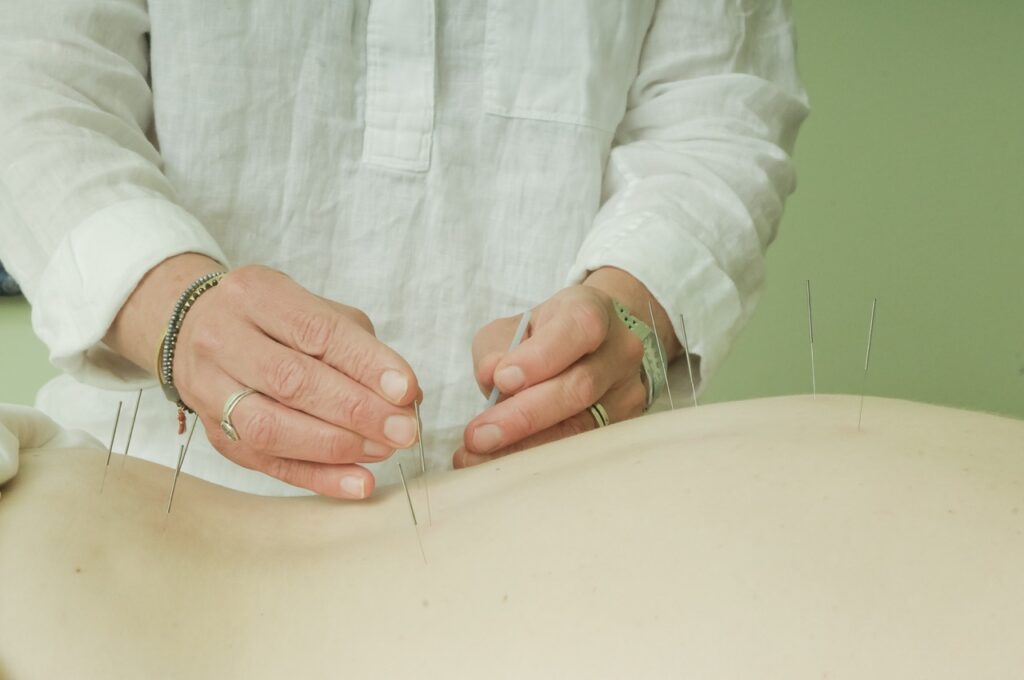
- Weekly acupuncture sessions — tailored to each phase of your cycle
- Electroacupuncture — for uterine and ovarian blood flow
- Custom Chinese herbal formula — rotated through follicular, ovulatory, luteal, and menstrual phases
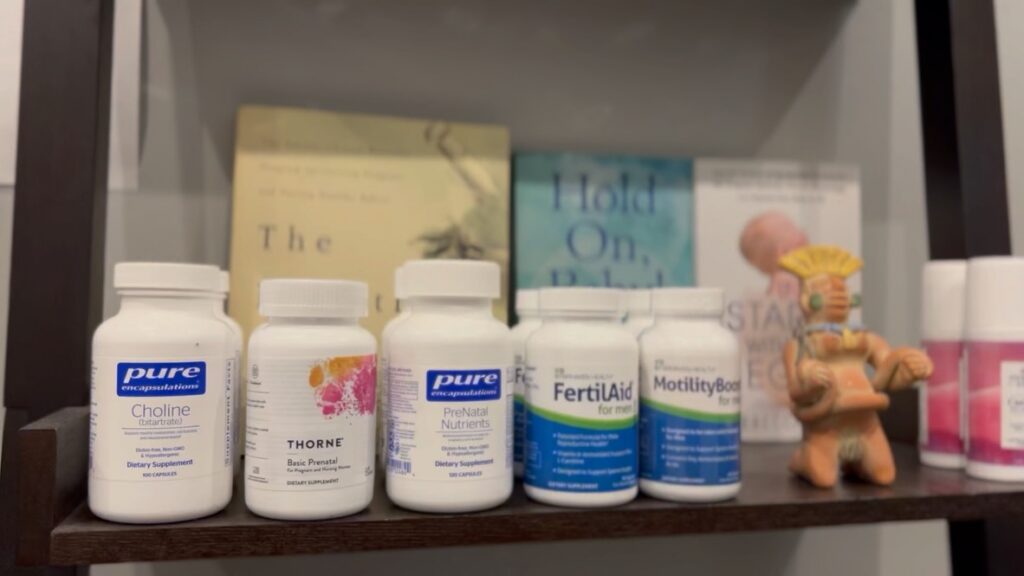
- Targeted supplement protocol — typically including CoQ10 (200–600 mg ubiquinol), vitamin D, prenatal, omega-3s, and DHEA when appropriate, ordered through our Fullscript pharmacy
- Red light therapy — for mitochondrial support of egg quality
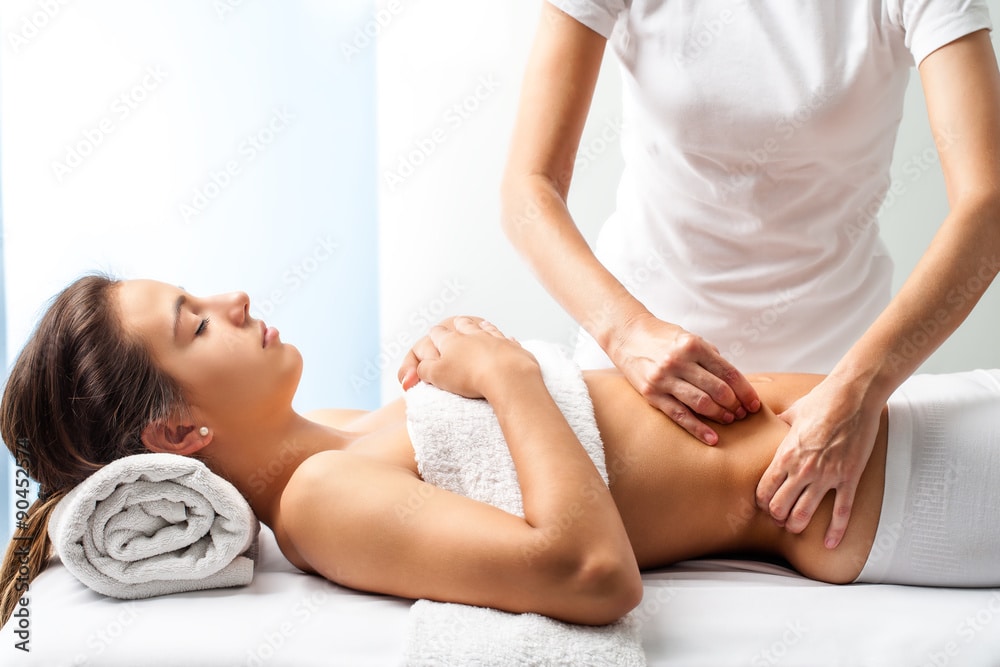
- Fertility-enhancing massage (FEM) — to mobilize pelvic circulation
- Lifestyle and nutrition guidance — building on our Fall Fertility Series on lifestyle and nutrition for fertility
- Stress-reduction and nervous-system support — meditation, breathwork, and access to our free monthly women’s infertility support group
- First-trimester pregnancy support — for patients with a history of loss or anxiety around early pregnancy
When to Start Acupuncture for Fertility Over 35
The most consistent finding across the research is that acupuncture for advanced maternal age works best when it is given time to work. Because egg development takes roughly 90 days, the eggs ovulating today were responsive to your physiology three months ago.
For best results, we suggest:
✔ Begin 3–6 months before trying to conceive or starting IVF, if possible
✔ Weekly acupuncture sessions through the preparation period
✔ Continue weekly during active TTC cycles — with extra sessions around ovulation
✔ Intensify around IUI or IVF — especially during controlled ovarian stimulation, which has the strongest pregnancy-rate evidence
✔ Maintain through the first trimester if you conceive, given higher early-pregnancy support needs after 35
If you are 40 or older, please do not wait a year to seek evaluation or to start integrative support. The biology moves quickly enough in this window that time matters.
Clinical Insight from Our Practice
At Acupuncture Denver, our patients over 35 most commonly report:
- more regular and predictable cycles within 2–3 months
- clearer ovulation signs and stronger luteal phases
- improved sleep and lower baseline anxiety
- a sense of agency in a process that often feels out of one’s hands
- better-quality IVF cycles when they pursue treatment
Many also conceive — sometimes naturally, sometimes through IUI, sometimes through IVF. We do not promise outcomes, but we do bring two decades of experience working alongside Denver’s leading reproductive endocrinologists. Jane, Merry, and Mally are all ABORM board-certified Reproductive Medicine Specialists.
Patient Takeaways
If you are trying to conceive after 35 or 40:
✔ Fertility declines with age, but does not disappear — the conversation is about probabilities, not certainties
✔ Egg quality (mitochondrial function) is the single biggest factor — and the area where lifestyle, supplements, and acupuncture have the most mechanistic plausibility
✔ ASRM guidelines say to seek evaluation after 6 months if 36–40, and immediately if over 40
✔ Acupuncture has meaningful evidence as an IVF adjunct in women 35+, with the largest live-birth benefits seen in the 35–40 age range
✔ Plan for 3–6 months of preparation — egg development takes ~90 days
✔ Acupuncture pairs well with conventional care: natural conception, IUI, IVF, and donor-egg cycles
Considering Acupuncture for Fertility Over 35 or 40?
If you are trying to conceive in your late 30s or 40s — naturally, with IUI, or with IVF — acupuncture may be a meaningful part of your plan. At Acupuncture Denver, we will design a personalized protocol around your:
- age, AMH, and cycle patterns
- complete workup and any gaps in testing
- timeline and treatment plan (natural, IUI, IVF, donor egg)
- stress, sleep, and overall health
You are also warmly invited to our free monthly women’s infertility support group — a space we have held for nearly 20 years for women navigating exactly these questions.
Frequently Asked Questions
Does acupuncture really help fertility after 35?
The strongest evidence is in the IVF setting, where multiple meta-analyses — including a 2024 review of 25 RCTs and 4,757 participants — show higher clinical pregnancy and live birth rates with acupuncture as an adjunct. Subgroup analyses suggest the 35–40 age range may benefit most. For natural conception, mechanistic evidence supports acupuncture’s role in cycle regulation, blood flow, and stress reduction, though larger high-quality trials are still needed.
How long does acupuncture take to work for women over 35?
Most patients begin to notice changes in cycles within 2–3 menstrual cycles. Because egg development takes about 90 days, we recommend 3–6 months of consistent preparation before active TTC, IUI, or IVF, when possible.
Can acupuncture improve egg quality at 40?
Acupuncture cannot make a woman’s eggs younger, but it may support the mitochondrial and blood-flow factors that meaningfully affect egg quality. Combined with CoQ10 (200–600 mg ubiquinol) and other targeted antioxidants, the combination has documented benefits in animal and observational human studies. See our companion post on acupuncture for egg quality for more.
What is “advanced maternal age” — and does it mean I can’t get pregnant?
“Advanced maternal age” is medical shorthand for pregnancy or attempted pregnancy at 35 or older. It signals a probability shift — not an inability. Many women conceive and carry healthy pregnancies into their early and mid 40s. The label exists to flag higher-quality monitoring, not to predict an outcome for you specifically.
When should I see a fertility specialist after 35?
According to ASRM: if you are age 35 or younger, after 12 months of trying. If you are 36–40, after 6 months. If you are over 40, immediately at the time you begin trying. If you have known issues (irregular cycles, prior losses, endometriosis, pelvic surgery), seek evaluation sooner.
Should I do acupuncture if I’m using IVF for fertility over 35?
Yes — and the timing matters. The strongest IVF pregnancy-rate evidence is for acupuncture during controlled ovarian stimulation. Most fertility-focused acupuncturists recommend starting 8–12 weeks before an IVF cycle and continuing through stimulation, retrieval, and around embryo transfer. See our post on acupuncture before embryo transfer.
Can acupuncture help with miscarriage prevention after 35?
Miscarriage risk increases with age primarily because of higher rates of chromosomal abnormalities — which acupuncture cannot change. But for the modifiable contributors (hormonal balance, blood flow, endometrial receptivity, stress physiology, inflammation), acupuncture has plausible mechanisms and accumulating evidence. See our post on acupuncture for recurrent pregnancy loss.
Is acupuncture safe during IVF or pregnancy after 35?
Yes, when performed by a licensed, board-certified practitioner with advanced fertility training. All Acupuncture Denver practitioners are NCCAOM board-certified and ABORM-certified as TCM Reproductive Medicine Specialists. We have specific training in pregnancy-safe protocols and coordinate routinely with Denver-area reproductive endocrinologists.
Do you use Chinese herbs for fertility over 35?
Yes. We have a full granular Chinese herbal pharmacy and create custom formulas tailored to each patient’s TCM pattern and cycle phase. Herbal formulas are particularly useful in the over-35 population for Kidney essence and Blood support. All herbs are screened for safety with any fertility medications you may be taking.
References
- American Society for Reproductive Medicine Practice Committee. (2022). Optimizing natural fertility: a committee opinion. Fertility and Sterility.
- American Society for Reproductive Medicine Practice Committee. (2021). Fertility evaluation of infertile women: a committee opinion. Fertility and Sterility.
- American College of Obstetricians and Gynecologists. (2025). Anticipatory Counseling Regarding Ovarian-Factor Fertility Decline. Committee Statement.
- Walker, M. H., & Tobler, K. J. Age-Related Fertility Decline. StatPearls. NCBI Bookshelf.
- (2025). Age-stratified anti-Müllerian hormone (AMH) nomogram: a comprehensive cohort study including 22,920 women. Frontiers in Endocrinology.
- Bentov, Y., & Casper, R. F. (2015). Coenzyme Q10 restores oocyte mitochondrial function and fertility during reproductive aging. Aging Cell.
- (2025). Exploring the protective effects of coenzyme Q10 on female fertility. Frontiers in Cell and Developmental Biology.
- Xu, M., Zhu, M., & Zheng, C. (2024). Effects of acupuncture on pregnancy outcomes in women undergoing in vitro fertilization: an updated systematic review and meta-analysis. Archives of Gynecology and Obstetrics, 309(3), 775–788.
- (2012). P02.15. Acupuncture improves in vitro fertilization live birth outcomes: a retrospective chart review. BMC Complementary and Alternative Medicine.
- (2025). Different effectiveness of acupuncture treatment schedule on ART pregnancy outcomes: a systematic review and network meta-analysis. Frontiers in Endocrinology.
- (2026). Clinical evidence of acupuncture for infertile women with diminished ovarian reserve undergoing IVF/ICSI: a systematic review and meta-analysis. Frontiers in Endocrinology.
- Zhong, Y., et al. (2019). Acupuncture in improving endometrial receptivity: a systematic review and meta-analysis. BMC Complementary Medicine and Therapies.
- (2025). Acupuncture as an adjunct therapy for enhancing endometrial receptivity in female infertility: a literature review. PMC12368429.
- (2024). Trends in acupuncture for infertility: a scoping review with bibliometric and visual analysis. Frontiers in Endocrinology.
- (2024). Age among women and men, time to pregnancy and risk of miscarriage. PMC12625503.
Medical disclaimer: This article is for educational purposes only and is not a substitute for personalized medical care. Acupuncture and Chinese herbal medicine should be provided by a licensed, board-certified practitioner with advanced fertility training, in coordination with your reproductive endocrinologist or OB-GYN.