By Jane Gregorie, M.S., L.Ac., FABORM Owner & Clinic Director
Introduction
If you have lived with chronic low back pain for more than a few months, you already know the experience is not just physical. It is the missed workouts. The cancelled plans. The way you brace before standing up from a chair. The exhausting search for something — anything — that works without sending you down a path of escalating medications, injections, or surgery.
You are not alone, and the numbers are sobering. In 2020, low back pain affected an estimated 619 million people worldwide, and it remains the single leading cause of years lived with disability globally (Ferreira et al., 2023, Lancet Rheumatology — Global Burden of Disease Study 2021). In the United States, the lifetime prevalence of back pain is 65–80%. By 2050, the global figure is projected to rise to 843 million.
What has changed substantially in the last decade is what major medical organizations now recommend you try first. The 2017 American College of Physicians clinical practice guideline — one of the most influential evidence-based pain guidelines in U.S. medicine — explicitly recommends acupuncture as a first-line non-pharmacologic treatment for both acute, subacute, and chronic low back pain (Qaseem et al., 2017, Annals of Internal Medicine).
At Acupuncture Denver, we have spent over two decades treating chronic low back pain — including patients who have tried physical therapy, medication, injections, and sometimes surgery, and who are looking for an evidence-based path forward. This guide walks through what the current research says, how acupuncture may help biologically, the Traditional Chinese Medicine perspective on low back pain, and what a personalized treatment plan looks like in our clinic.
This guide is for you if you are:
- living with low back pain that has lasted more than 3 months
- frustrated with the pain-medication-injection cycle and looking for a non-opioid first-line option
- preparing for or recovering from back surgery and want adjunctive support
- weighing acupuncture against (or alongside) physical therapy, chiropractic, or massage
- a Denver-area resident looking for a board-certified acupuncturist with experience in chronic pain
What Is Chronic Low Back Pain?
Low back pain is defined as pain located between the lower margin of the ribs and the gluteal folds, with or without radiation into one or both legs. It becomes chronic when it persists for at least 12 weeks. Beyond that threshold, the biology changes — peripheral pain signals can drive central sensitization of the nervous system, and what started as a tissue-level injury can become a brain-and-spinal-cord pattern that outlasts the original cause.
How common is chronic low back pain?
- 619 million people worldwide were affected by low back pain in 2020, projected to rise to 843 million by 2050(Ferreira et al., 2023, Lancet Rheumatology)
- 65–80% lifetime prevalence in U.S. adults
- Leading cause of years lived with disability globally — higher than diabetes, depression, or heart disease (IASP — The Global Burden of Low Back Pain)
- Higher prevalence in women than men, increasing with age and peaking between 80–84 years
What causes chronic low back pain?
Most chronic low back pain is non-specific — meaning no single identifiable cause is found on imaging. Contributing factors include:
- Mechanical — disc degeneration, facet joint arthritis, muscle and ligament strain, postural patterns, weak deep stabilizers (multifidus, transverse abdominis)
- Neurologic — nerve root compression (sciatica), spinal stenosis, central sensitization
- Inflammatory — disc herniation with inflammatory cascade, ankylosing spondylitis, sacroiliitis
- Psychosocial — sleep deprivation, chronic stress, depression, anxiety, fear-avoidance behaviors, work-related load
- Lifestyle — prolonged sitting, deconditioning, smoking, obesity
- Visceral referral — kidney issues, gynecological conditions, gastrointestinal patterns
When to see a doctor first (red flags)
Most low back pain is benign, but the following symptoms warrant urgent medical evaluation before considering acupuncture or other complementary care:
- Sudden severe pain after a fall or trauma
- Loss of bowel or bladder control — possible cauda equina syndrome (medical emergency)
- Progressive weakness or numbness in the legs
- Fever, unexplained weight loss, or night sweats with back pain
- History of cancer or osteoporosis with new back pain
- Saddle anesthesia (numbness in the inner thighs/groin)
If any of these apply, please see your primary care physician or go to an emergency department.
What the Major Medical Guidelines Say About Acupuncture for Low Back Pain
Acupuncture’s place in low back pain care is no longer a question of integrative-medicine preference — it is in the formal guidelines.
American College of Physicians (ACP) — 2017 Clinical Practice Guideline
The single most influential U.S. guideline on low back pain. Published in Annals of Internal Medicine and based on a systematic review through 2016, it recommends:
- For acute and subacute low back pain (less than 12 weeks): “Treat with non-drug therapies such as superficial heat, massage, acupuncture, or spinal manipulation.”
- For chronic low back pain: “Initially select non-drug therapy with exercise, multidisciplinary rehabilitation, acupuncture, mindfulness-based stress reduction, tai chi, yoga, motor control exercise, progressive relaxation, electromyography biofeedback, low level laser therapy, operant therapy, cognitive behavioral therapy, or spinal manipulation.”
The guideline summary notes that acupuncture showed improved pain (moderate effect) and function (no to moderate effect, depending on comparator) (Qaseem et al., 2017, Annals of Internal Medicine).
The clinical implication is straightforward: under ACP guidance, your physician should be offering acupuncture beforeopioids, before injections, and often before prolonged medication trials.
NIH National Center for Complementary and Integrative Health (NCCIH)
NCCIH’s evidence summary concludes that acupuncture has moderate-certainty evidence for chronic low back pain, with associated improvements in pain and function (NCCIH — Low-Back Pain and Complementary Health Approaches).
Agency for Healthcare Research and Quality (AHRQ) — 2020 Review
A comprehensive 2020 review by AHRQ found that acupuncture was associated with slightly greater effects on pain and function at 1 to 6 months compared to sham acupuncture or usual care.
CDC and the non-opioid first-line conversation
In the context of the opioid epidemic, the CDC and major pain organizations have explicitly shifted toward non-pharmacologic first-line treatment for chronic non-cancer pain. Acupuncture is one of the most well-evidenced of those options.
What the Research Says: Landmark Acupuncture Studies for Low Back Pain
The Vickers Individual Patient Data Meta-Analysis
The single most important acupuncture pain study to date — and one of the largest IPD meta-analyses in pain medicine — was conducted by the Acupuncture Trialists’ Collaboration and published by Vickers et al.
- Vickers, A. J., Cronin, A. M., Maschino, A. C., et al. (2012). Archives of Internal Medicine, 172(19), 1444–1453. Acupuncture for chronic pain: Individual patient data meta-analysis.
Pooling individual data from 29 high-quality RCTs and 17,922 patients, the study found that acupuncture was superior to both sham acupuncture and no-acupuncture controls for chronic back and neck pain, osteoarthritis, chronic headache, and shoulder pain (P<0.001 for all comparisons). Effect sizes were modest but consistent.
A 2018 follow-up by the same group, published in the Journal of Pain, demonstrated that the benefits of acupuncture for chronic pain were largely sustained at 12 months (Vickers et al., 2018, Journal of Pain).
Cherkin et al. — Acupuncture vs simulated acupuncture for chronic LBP
In a landmark 2009 trial published in Archives of Internal Medicine (Cherkin et al.), patients with chronic low back pain were randomized to individualized acupuncture, standardized acupuncture, simulated acupuncture (toothpicks at acupoints), or usual care. All three acupuncture arms outperformed usual care at 8 weeks, with benefits sustained at 52 weeks. The trial is often cited in both directions — supporters note the strong effect over usual care; skeptics note that the simulated-acupuncture arm performed similarly to real acupuncture. The most honest interpretation is that structured acupuncture care meaningfully outperforms standard medical management, while specific point selection may matter less than receiving consistent, attentive, hands-on care.
Mechanism studies
Acupuncture works through multiple converging biological pathways:
- Endogenous opioid release — the foundational mechanism. Acupuncture stimulates release of β-endorphin, enkephalin, and dynorphin in the central nervous system, which are the body’s own opioid peptides. This was first demonstrated by Han, J. S. in landmark studies in the 1980s and has since been replicated extensively.
- Adenosine A1 receptor activation — local release of adenosine at acupuncture points produces analgesia via the A1 receptor (Goldman et al., 2010, Nature Neuroscience).
- Central pain modulation — fMRI studies demonstrate that acupuncture modulates activity in the periaqueductal gray, anterior cingulate cortex, and other key pain-processing regions.
- Anti-inflammatory effects — vagal nerve activation drives the cholinergic anti-inflammatory pathway, reducing systemic inflammatory cytokines relevant to chronic pain.
- Local circulation and tissue effects — needling triggers local microcirculation, fibroblast signaling, and connective-tissue mechanotransduction.
- Reduced central sensitization — chronic pain involves nervous system “wind-up.” Acupuncture appears to dampen this through descending inhibitory pathways.
How Acupuncture May Help Chronic Low Back Pain (Biological Perspective)
Building on those mechanism studies, here is what acupuncture does that matters specifically for chronic low back pain.
1. Triggers Endogenous Opioid Release
Acupuncture stimulates the body’s own opioid system — β-endorphin, enkephalin, and dynorphin — which act on the same receptors that pharmaceutical opioids do, but without the dependency, tolerance, or sedation profile. For patients trying to reduce opioid use or avoid initiating it, this is a clinically meaningful effect.
2. Modulates Central Pain Processing
Chronic low back pain involves nervous-system changes — central sensitization, allodynia (pain from non-painful stimuli), and hyperalgesia (amplified pain response). Acupuncture has documented effects on descending pain-inhibition pathways and activity in central pain-processing regions, making it particularly useful for chronic patterns that have outlasted the original tissue injury.
3. Reduces Local and Systemic Inflammation
Through vagal nerve activation of the cholinergic anti-inflammatory pathway, acupuncture can lower systemic inflammatory cytokines. For low back pain involving disc inflammation, facet arthritis, or sacroiliitis, this is one of the relevant pathways.
4. Improves Local Tissue Health and Circulation
Needling — especially when combined with electroacupuncture — improves local microcirculation, supports fascial mobility, and reduces protective muscle guarding around the lumbar paraspinals, quadratus lumborum, and gluteal complex.
5. Calms the Stress-Pain Loop
Chronic pain and chronic stress amplify each other through the HPA axis. Cortisol-driven inflammation worsens pain; pain worsens stress and sleep. Acupuncture shifts the body into parasympathetic tone, lowers cortisol, and improves sleep — all of which feed back positively on pain.
Traditional Chinese Medicine Perspective on Low Back Pain
In Traditional Chinese Medicine, pain is understood through the framework of Bi Syndrome (痹证) — pain caused by obstruction of Qi and Blood in the channels. Identifying the type of obstruction is what guides treatment.
Cold-Damp Bi (the most common chronic LBP pattern)
Associated with:
- pain that is worse in cold, damp, or rainy weather
- pain relieved by warmth (heating pad, hot shower)
- a heavy, dull, aching quality
- stiffness, especially in the morning or after sitting
- worse with prolonged static positions
Treatment warms the channels, dispels Cold and Damp, and moves stagnant Qi and Blood — often with acupuncture plus moxibustion (a warming TCM technique) and warming herbal formulas.
Qi and Blood Stagnation
Associated with:
- a clear injury, fall, or surgical history
- sharp, fixed, stabbing pain
- pain that does not move (versus Wind Bi, which migrates)
- discoloration or bruising in the area
- worse with palpation, better with movement (initially)
Treatment moves Qi and Blood, often with electroacupuncture, cupping, or gua sha to break up the stagnation.
Kidney Deficiency (Yin or Yang)
This pattern is particularly relevant in chronic, long-standing low back pain — especially in patients over 40, post-childbirth, or those with significant lifetime physical labor. In TCM, the lower back is “the residence of the Kidneys.”
Associated with:
- chronic, dull lower back pain — often bilateral and central
- pain that worsens with fatigue or after sex
- low energy, tinnitus, or hearing changes (Kidney Yin)
- cold extremities, low libido, frequent urination (Kidney Yang)
- knee weakness or pain along with back pain
Treatment tonifies Kidney essence — a longer, deeper protocol that addresses the root rather than just the symptom.
Liver Qi Stagnation Causing Pain
Stress and emotion are not “in your head” in TCM — they directly affect the channels. Chronic Liver Qi stagnation can manifest as:
- back pain that flares with stress
- pain associated with significant muscle tension (often radiating to neck and shoulders)
- premenstrual back pain in women
- tension headaches alongside back pain
- worse during emotionally demanding periods
Treatment smooths Liver Qi and calms the nervous system — directly relevant to the stress-pain loop documented in the Western literature.
Bony Bi (Gu Bi)
Associated with:
- deep, chronic, severe pain affecting bones and joints
- imaging findings of degenerative changes, disc disease, or stenosis
- long-standing disease history
Treatment combines acupuncture for symptom relief with deep tonification protocols and often herbal medicine, with the understanding that structural changes cannot be reversed but the system around them can be supported.
Most patients with chronic low back pain present with combinations of these patterns — most commonly Kidney Deficiency with overlying Cold-Damp Bi and Qi-Blood Stagnation. Identifying the layers is what allows a skilled NCCAOM-board-certified acupuncturist to design a treatment plan that addresses both the symptom and the root.
What a Personalized Chronic LBP Plan Looks Like at Acupuncture Denver
We approach chronic low back pain with a layered, multi-modality protocol:
- Comprehensive intake and TCM pattern diagnosis — including a full pain history, prior workup and imaging, current activity and ergonomics, sleep, and stress
- Coordination with your physician, physical therapist, or pain specialist — chronic pain care should be a team effort
- Weekly acupuncture sessions initially — with point selection tailored to your specific TCM pattern and the affected segmental levels
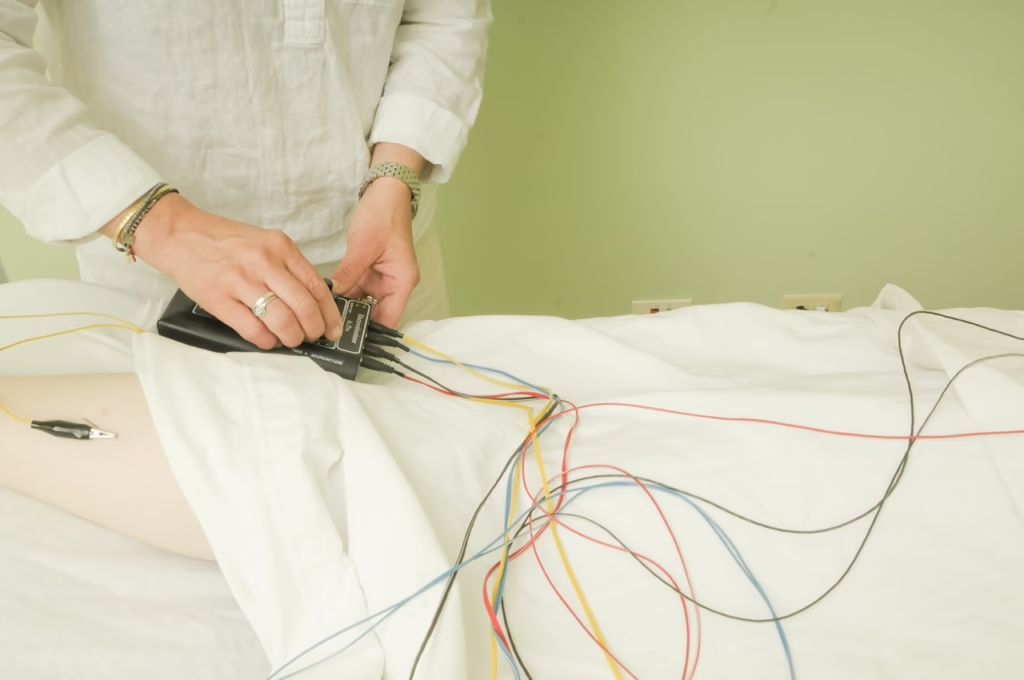
- Electroacupuncture — for stronger pain modulation and improved local circulation; often the most effective form for moderate-to-severe pain
- Moxibustion and infrared heat — particularly for Cold-Damp patterns
- Cupping and gua sha — for myofascial restriction and stubborn paraspinal tension
- Massage therapy — to address muscular components and complement acupuncture
- Custom Chinese herbal formulas — for pattern-specific support, especially Kidney tonification or warming protocols
- Infrared sauna — for circulation, parasympathetic activation, and Cold-Damp pattern support
- Ergonomic, sleep, and movement guidance — small changes often have outsized effects
- Stress and nervous-system regulation — given the stress-pain loop
- Targeted supplements when appropriate — ordered through our Fullscript pharmacy
How Many Sessions Will I Need?
This is the most common question we get from chronic pain patients, and the honest answer is: it depends on how long you have had the pain and how layered the pattern is.
A reasonable rule of thumb based on the research:
✔ Weekly sessions for 6–8 weeks is the typical initial course for chronic low back pain
✔ Most patients begin to notice meaningful change within 3–6 sessions
✔ More chronic and complex cases (multi-year pain, multiple prior treatments, central sensitization) may need 8–12+ sessions
✔ Maintenance care — typically every 2–4 weeks — helps sustain gains
✔ Many patients move to maintenance after their initial course
✔ Acute flares typically resolve with 1–3 targeted sessions
If after 6 sessions you have seen no change at all, we will reassess the pattern, your workup, and whether additional medical evaluation is warranted.
Clinical Insight from Our Practice
At Acupuncture Denver, patients receiving care for chronic low back pain most commonly report:
- meaningful reductions in pain intensity within 3–6 sessions
- better sleep (often the first thing to change)
- reduced reliance on as-needed medications
- improved range of motion and ability to sit/stand for longer
- a calmer baseline and reduced fear of movement
- a sense of progress in a journey that has often felt stuck
We do not promise outcomes — no one ethically can — but we have seen the difference that consistent, individualized acupuncture care makes for chronic low back pain. Our practitioners are NCCAOM board-certified in both acupuncture and Chinese herbology, with over two decades of clinical experience treating pain. We work alongside Denver-area primary care physicians, pain specialists, orthopedists, and physical therapists.
Patient Takeaways
If you are living with chronic low back pain:
✔ Acupuncture is now a guideline-recommended first-line treatment — the 2017 ACP Clinical Practice Guideline explicitly recommends it for both acute and chronic low back pain
✔ The strongest evidence comes from the Vickers IPD meta-analysis (29 RCTs, 17,922 patients) — acupuncture superior to both sham and no-acupuncture, with benefits sustained at 12 months
✔ Mechanisms include endogenous opioid release, adenosine A1 modulation, central pain regulation, anti-inflammatory effects, and stress-pain loop interruption
✔ Most chronic low back pain in TCM is treated as a combination of Cold-Damp Bi, Qi-Blood Stagnation, and Kidney Deficiency
✔ Plan for weekly or twice weekly sessions for 4–8 weeks as an initial course, with most patients seeing change by session 3–6
✔ Acupuncture pairs well with conventional care: physical therapy, medication management, and pain specialists
✔ Red-flag symptoms (loss of bowel/bladder control, progressive weakness, fever with back pain) require urgent medical evaluation before any complementary care
Considering Acupuncture for Chronic Low Back Pain?
If you are tired of the pain-medication-injection cycle and are looking for a guideline-recommended, evidence-based path, acupuncture may be a meaningful part of your plan. At Acupuncture Denver, we will design a personalized protocol around your:
- specific TCM pattern (Cold-Damp Bi, Qi-Blood Stagnation, Kidney Deficiency, etc.)
- full pain history and prior workup
- imaging findings and any structural diagnoses
- activity, ergonomic, and stress contributors
- coordination with your physician, PT, or pain specialist
👉 Schedule your consultation to begin a personalized plan for your chronic low back pain.
Frequently Asked Questions
Does acupuncture really work for chronic low back pain?
Yes — and the evidence is now strong enough to be in the formal guidelines. The 2017 American College of Physicians Clinical Practice Guideline recommends acupuncture as a first-line non-drug treatment for both acute and chronic low back pain. The Vickers Acupuncture Trialists’ Collaboration individual patient data meta-analysis (29 RCTs, 17,922 patients) found acupuncture superior to both sham and no-acupuncture controls, with benefits sustained at 12 months in their 2018 update.
How many acupuncture sessions will I need for low back pain?
Most patients with chronic low back pain do an initial course of weekly sessions for 6–8 weeks, with meaningful change often noticeable by session 3–6. More chronic or complex cases may need 8–12+ sessions. Many patients move to maintenance care every 2–4 weeks after the initial course. Acute flares typically respond in 1–3 targeted sessions.
Is acupuncture covered by insurance for back pain?
Coverage varies significantly by plan. Many insurance plans — including some Medicare Advantage plans — now cover acupuncture for chronic low back pain following the 2020 CMS decision recognizing it for this indication. We are not in-network with any insurance companies, Medicaid, or Medicare, but if your insurance company pays for out-of-network care, we can provide you with a superbill so that you can get reimbursed for cost of service. We are a cash-based practice, so our rates are reasonable ($165 for full initial visit/$99 for follow ups/$99 for “Brief Initial Visit” for acute pain/8-visit packages for $752)
What does acupuncture feel like for back pain?
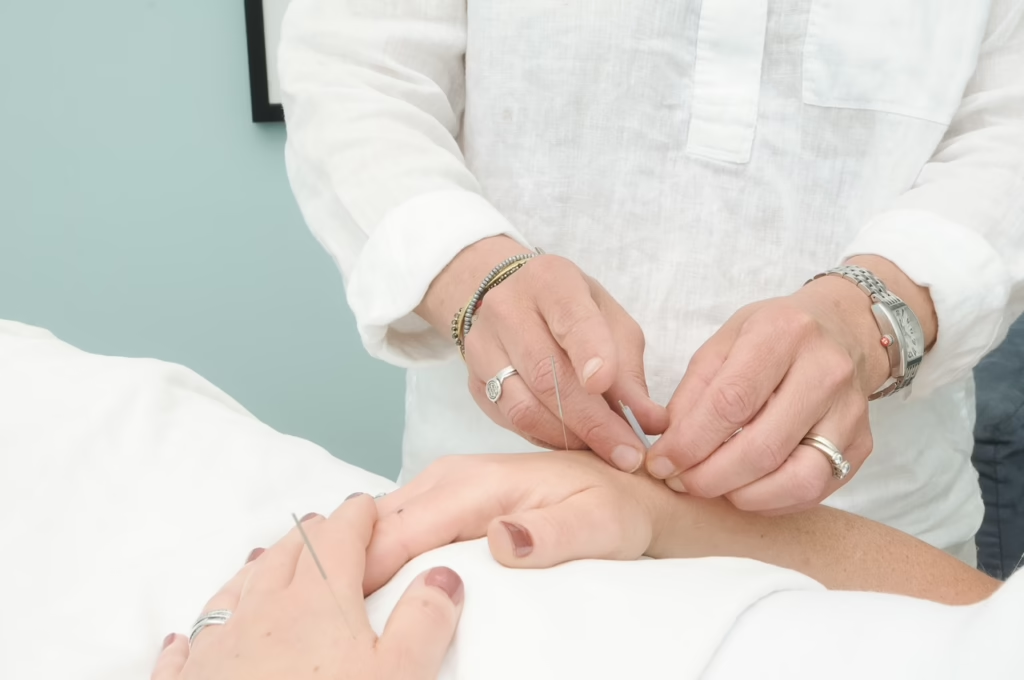
Most patients describe acupuncture as a mild dull ache, warmth, or heaviness at the needling sites, sometimes with a “spreading” sensation along the muscle. Most needles are barely felt; some produce a brief, sharp sensation that fades. Sessions typically last 30–45 minutes with needles retained while you rest. Many patients fall asleep.
How is acupuncture different from dry needling?
Acupuncture is a comprehensive Traditional Chinese Medicine system requiring a Master’s degree, NCCAOM board certification, and state licensure — typically 3–4 years of graduate-level training. Dry needling is a technique often performed by physical therapists or chiropractors with a much shorter training course (sometimes a weekend) focused on trigger-point release. Both can help muscular pain; acupuncture additionally addresses the broader TCM pattern and offers a wider range of techniques, including electroacupuncture, moxibustion, cupping, and herbal medicine.
Should I do acupuncture along with physical therapy or chiropractic?
In most cases, yes. Acupuncture, physical therapy, and chiropractic each address different aspects of low back pain (pain modulation and Qi/Blood flow; movement and stabilization; spinal mechanics) and combine well. The 2017 ACP guideline lists all three among recommended non-drug therapies. We can coordinate with PTs, chiropractors, and pain specialists across Denver.
Can acupuncture help if I have a herniated disc or spinal stenosis?
Yes — acupuncture can help manage the pain and inflammatory response of disc and stenosis-related back pain, even though it cannot reverse the structural change. Many patients use acupuncture as a non-surgical option to manage symptoms over the long term. For patients pursuing surgery, acupuncture is well-supported for pre- and post-operative pain management. If you have progressive neurological symptoms (worsening weakness, numbness, loss of bowel/bladder control), please see your physician urgently before any non-medical care.
Is acupuncture safe?
Yes, when performed by a licensed, board-certified practitioner using sterile single-use needles. Serious adverse events are rare. Common minor effects include brief soreness, mild bruising, or transient fatigue after a session. All Acupuncture Denver practitioners are NCCAOM board-certified with over two decades of clinical experience.
Do you use Chinese herbs for back pain?
Yes — when appropriate. We have a full granular Chinese herbal pharmacy and can create custom formulas tailored to your TCM pattern. Herbal formulas are particularly useful for Cold-Damp Bi and Kidney Deficiency patterns, where they extend the effect of acupuncture between sessions. All herbs are screened for interactions with any medications you may be taking.
References
- Qaseem, A., Wilt, T. J., McLean, R. M., & Forciea, M. A. (2017). Noninvasive Treatments for Acute, Subacute, and Chronic Low Back Pain: A Clinical Practice Guideline From the American College of Physicians. Annals of Internal Medicine, 166(7), 514–530.
- Ferreira, M. L., et al. (2023). Global, regional, and national burden of low back pain, 1990–2020, its attributable risk factors, and projections to 2050: a systematic analysis of the Global Burden of Disease Study 2021. The Lancet Rheumatology.
- International Association for the Study of Pain (IASP). The Global Burden of Low Back Pain.
- Vickers, A. J., Cronin, A. M., Maschino, A. C., et al. (2012). Acupuncture for chronic pain: Individual patient data meta-analysis. Archives of Internal Medicine, 172(19), 1444–1453.
- Vickers, A. J., Vertosick, E. A., Lewith, G., et al. (2018). Acupuncture for chronic pain: Update of an individual patient data meta-analysis. Journal of Pain, 19(5), 455–474.
- Cherkin, D. C., Sherman, K. J., Avins, A. L., et al. (2009). A randomized trial comparing acupuncture, simulated acupuncture, and usual care for chronic low back pain. Archives of Internal Medicine, 169(9), 858–866.
- Goldman, N., Chen, M., Fujita, T., et al. (2010). Adenosine A1 receptors mediate local anti-nociceptive effects of acupuncture. Nature Neuroscience, 13, 883–888.
- National Center for Complementary and Integrative Health (NCCIH). Low-Back Pain and Complementary Health Approaches: What You Need To Know.
- National Center for Complementary and Integrative Health (NCCIH). Acupuncture: Effectiveness and Safety.
- Skelly, A. C., Chou, R., Dettori, J. R., et al. (2020). Noninvasive Nonpharmacological Treatment for Chronic Pain: A Systematic Review Update. AHRQ Comparative Effectiveness Review No. 227.
- Han, J. S. (2004). Acupuncture and endorphins. Neuroscience Letters, 361(1–3), 258–261.
- Chou, R., Deyo, R., Friedly, J., et al. (2017). Nonpharmacologic Therapies for Low Back Pain: A Systematic Review for an American College of Physicians Clinical Practice Guideline. Annals of Internal Medicine, 166(7), 493–505.
Medical disclaimer: This article is for educational purposes only and is not a substitute for personalized medical care. Chronic low back pain should be evaluated by a qualified healthcare provider, and red-flag symptoms (progressive weakness, loss of bowel/bladder control, fever with back pain, history of cancer with new back pain) require urgent medical evaluation. Acupuncture and Chinese herbal medicine should be provided by a licensed, board-certified practitioner.