By Jane Gregorie, M.S., L.Ac., FABORMOwner & Clinic Director
Introduction
If you are a man reading this post, or a partner reading it on behalf of the man in your life, we want to start with something that often gets lost in fertility conversations: male factor is involved in roughly half of all infertility cases — and it is treatable, workable, and often meaningfully improvable.
For decades, fertility was framed as a “women’s issue,” and men have often been sidelined in the process. That framing is not only outdated — it is medically wrong. Commonly cited reproductive-medicine estimates put male factor involvement in roughly 40–50% of infertility cases, with a sole male-factor contribution in 20–30%. The American Urological Association / American Society for Reproductive Medicine 2024 Male Infertility Guideline notes that a male factor is found as part of the etiology in up to 60% of couples, and recommends that both partners be evaluated concurrently (AUA/ASRM, 2024).
At Acupuncture Denver, we treat male fertility as a substantive clinical focus in its own right — not just an afterthought to the female partner’s care. This guide walks through what the current evidence says about acupuncture and Chinese medicine for male factor infertility, how the biology actually works, and what a personalized plan looks like at our clinic.
This guide is for you if you are:
- half of a couple that has been trying to conceive for 12+ months (or 6+ months if the female partner is over 35)
- a man who has recently had a semen analysis with abnormal results (low count, poor motility, morphology issues, or elevated DNA fragmentation)
- preparing for IVF or ICSI and want to give the sperm side of the equation as much support as the egg side
- exploring what conventional medicine calls “unexplained infertility” and wondering whether male factor may be under-investigated (spoiler: it often is)
- weighing whether acupuncture and Chinese medicine can play a real role for the male partner
What Is Male Factor Infertility?
Male factor infertility refers to any condition in the male reproductive system that reduces the likelihood of conception. The AUA/ASRM 2024 Male Infertility Guideline — the leading U.S. clinical standard — recommends that both partners be evaluated concurrently once infertility is suspected, and that evaluation of the male begin with one or more semen analyses.
How common is male factor infertility?
- Male factor is involved in 40–50% of infertility cases (commonly cited reproductive-medicine estimates); AUA/ASRM notes male-factor involvement in up to 60% of couples
- Sole cause in 20–30% of couples
- Sperm quality has declined significantly in industrialized countries — Levine et al. 2023 reported a 51.6% decline in sperm concentration between 1973 and 2018 globally, with the rate of decline accelerating after 2000 (Levine et al., 2023, Human Reproduction Update)
- Male factor is dramatically under-investigated in couples with “unexplained infertility”
What does a semen analysis actually measure?
A semen analysis evaluates several parameters against reference values from the WHO 6th Edition Laboratory Manual for the Examination and Processing of Human Semen (2021):
- Volume — total ejaculate volume
- Concentration — sperm per milliliter
- Total sperm count — total number of sperm in the ejaculate
- Motility — the percentage of sperm that are moving (total motility) and moving with forward progression (progressive motility)
- Morphology — the percentage of sperm with normal shape (using strict Kruger criteria)
- Vitality — the percentage of live sperm
- pH, appearance, viscosity, and white blood cells — additional markers of reproductive tract health
The WHO 6th Edition made an important addition: it introduced standardized testing for sperm DNA fragmentation (SDF) and seminal oxidative stress (Boitrelle et al., 2021, Life — SWOT analysis of WHO 6th Edition).
Sperm DNA fragmentation — the often-missing test
A standard semen analysis does not include sperm DNA fragmentation (SDF). This is a major gap in many workups, because DNA fragmentation:
- can be elevated even when a standard semen analysis looks normal
- is associated with lower fertilization rates, poorer embryo development, higher miscarriage risk, and reduced IVF success
- is one of the leading suspected drivers of “unexplained” male-factor infertility
- is largely driven by oxidative stress — which is where acupuncture, lifestyle, and antioxidants become mechanistically relevant
If your semen analysis is normal but you have been trying without success — especially if the female partner has had recurrent pregnancy loss or unexplained infertility — a DNA fragmentation test (typically a DFI, or DNA Fragmentation Index) is worth requesting.
Common causes and contributors
- Varicocele — enlarged veins in the scrotum; the most common surgically correctable cause
- Hormonal factors — low testosterone, elevated prolactin, thyroid dysfunction, hypogonadism
- Genetic — Y-chromosome microdeletions, Klinefelter syndrome, cystic fibrosis carriers
- Post-infection or inflammation — history of mumps, prostatitis, STIs
- Anatomic — obstruction, absence of vas deferens, prior surgeries
- Environmental and lifestyle — heat exposure (hot tubs, saunas, laptops on the lap, tight underwear), pesticides, endocrine disruptors, tobacco, alcohol, cannabis, recreational drugs, obesity, chronic stress, sleep deprivation, poor diet
- Medications — testosterone replacement (paradoxically suppresses sperm production), finasteride, some antidepressants, chemotherapy history
- Age — sperm quality declines with age, though more gradually than egg quality
How Acupuncture and Chinese Medicine May Help (Biological Perspective)
Sperm are produced continuously through spermatogenesis, a ~74-day cycle. This is important for two reasons: it means the sperm ejaculated today reflects your physiology from roughly 2.5 months ago, and it means changes made now will meaningfully affect sperm quality in 2.5–3 months. That is the window in which acupuncture, lifestyle, and antioxidants can meaningfully shift the picture.
1. Reducing Oxidative Stress
Oxidative stress is the single most consequential modifiable driver of poor sperm quality and DNA fragmentation. Sperm are unusually vulnerable to oxidative damage because they carry very little antioxidant capacity of their own.
Acupuncture has documented anti-inflammatory and antioxidant effects mediated through vagal nerve activation and modulation of key oxidative-stress pathways. Combined with an antioxidant-rich diet and targeted supplementation (CoQ10, vitamin C, vitamin E, zinc, selenium, L-carnitine), the effect on the seminal environment can be substantial.
2. Improving Testicular Blood Flow
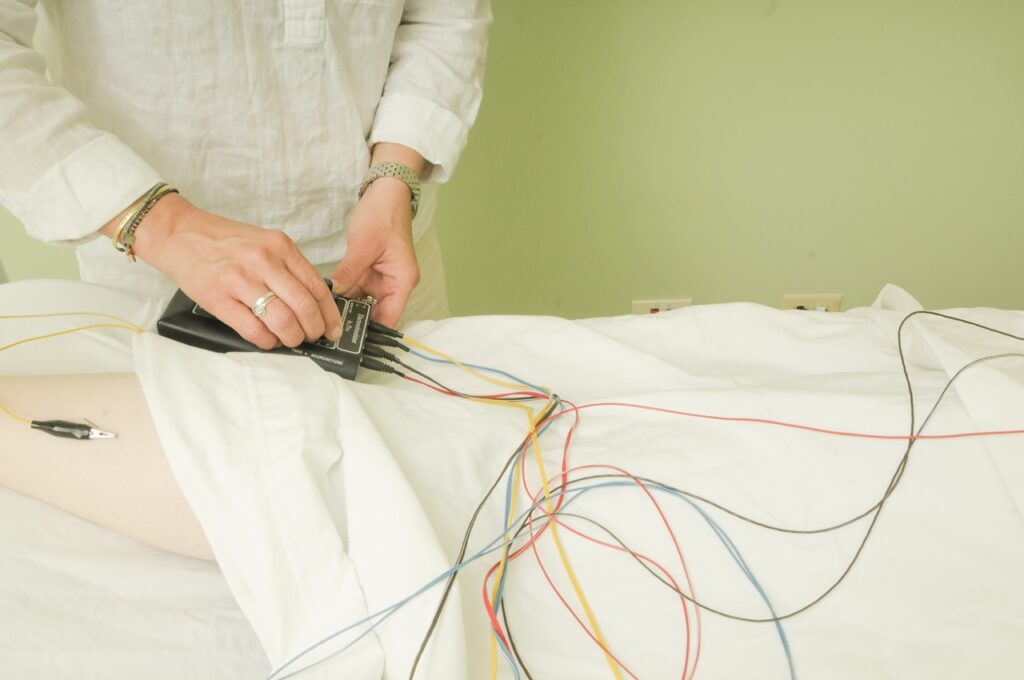
Sperm production requires good testicular perfusion. Acupuncture — especially electroacupuncture on lower-abdominal, sacral, and lower-limb points — supports pelvic and testicular circulation, delivering the nutrients and oxygen needed for healthy spermatogenesis. This is particularly relevant in men with varicocele or a history of pelvic surgery.
3. Supporting the HPT Axis and Testosterone
The hypothalamic-pituitary-testicular (HPT) axis regulates testosterone and gonadotropin (FSH, LH) production, which in turn drive spermatogenesis. Acupuncture has been shown to modulate this axis — supporting testosterone production, reducing the suppressive effects of chronic stress-driven cortisol, and improving the hormonal signals that maintain healthy sperm production.
4. Lowering Cortisol and Improving Sleep
Chronic stress and poor sleep both directly suppress testosterone and impair sperm production. Acupuncture shifts the autonomic nervous system into parasympathetic tone, lowers cortisol, and improves sleep quality — creating a hormonal environment more supportive of spermatogenesis. If you have been reading our companion post on stress and fertility, the same physiologic logic applies to male reproduction.
5. Addressing Inflammation
Chronic prostatitis, subclinical inflammation, and elevated white blood cells in semen all impair sperm quality. Acupuncture’s anti-inflammatory effects — via the cholinergic anti-inflammatory pathway — are directly relevant here.
What the Research Says About Acupuncture for Male Fertility
The evidence base for acupuncture in male factor infertility has grown steadily and is now supported by multiple systematic reviews and meta-analyses.
2023 Network Meta-Analysis on Non-Pharmaceutical Sperm Interventions
A 2023 systematic review and network meta-analysis published in Aging compared multiple non-pharmaceutical interventions for sperm quality across dozens of RCTs. Key findings:
- Acupuncture showed a significant advantage over placebo for improving sperm total motility (mean difference 17.81; 95% CI 10.32–25.29)
- Acupuncture significantly improved sperm forward (progressive) motility (MD 3.95; 95% CI 3.23–4.67)
- Acupuncture improved sperm concentration (MD 5.40; 95% CI 2.32–8.49) — comparable in effect to omega-3 fatty acids, lycopene, and antioxidant vitamins, which were tested as separate arms in the same network meta-analysis
2024 Electroacupuncture RCT on Total Motile Sperm Count
A 2024 randomized clinical trial published in the Journal of Public Health Research (Budihastuti et al.) examined the effect of electroacupuncture on total motile sperm count and sperm motility in infertile men. Electroacupuncture demonstrated meaningful improvements in both parameters compared to control (Budihastuti et al., 2024, J Public Health Res).
Earlier Systematic Review and Meta-Analysis
A 2014 systematic review and meta-analysis by Jerng et al. — the foundational review in this space — pooled evidence from RCTs of acupuncture for poor semen quality. Key results:
- Acupuncture increased the percentage of sperm with rapid progression (mean difference 6.35; 95% CI 4.38–8.32; P<0.00001)
- Acupuncture increased sperm concentration (mean difference 6.42; 95% CI 4.91–7.92; P<0.00001)
(Jerng et al., 2014, BMC Complementary and Alternative Medicine)
Sperm DNA Fragmentation
While RCT-scale evidence specifically on acupuncture and SDF is still emerging, the mechanistic case is strong: acupuncture reduces oxidative stress, and oxidative stress is the primary driver of DNA fragmentation. Multiple observational studies have documented reductions in DFI following acupuncture protocols, often combined with antioxidants.
What the evidence means for you
The honest read is this: acupuncture and Chinese medicine are not a substitute for evaluation by a urologist and appropriate medical treatment — particularly for varicocele, hormonal abnormalities, obstructive causes, or genetic conditions. But for the modifiable contributors to poor sperm quality — oxidative stress, HPT-axis suppression, inflammation, blood flow, stress physiology, and lifestyle — acupuncture has meaningful mechanistic and clinical evidence as an adjunct.
Traditional Chinese Medicine Perspective on Male Factor Infertility
In Traditional Chinese Medicine, the male reproductive system is governed primarily by the Kidneys — the same organ system that governs female reproduction, but with a masculine expression. Different underlying patterns lead to different sperm-analysis presentations.
Kidney Yang Deficiency
The most common pattern in male factor infertility.
Associated with:
- low libido
- cold extremities, low back pain, weak knees
- low sperm concentration or count
- decreased ejaculate volume
- low morning erections, low testosterone on labs
- fatigue, feeling “wiped out”
Treatment warms and tonifies Kidney Yang — often with acupuncture, moxibustion, and warming herbal formulas.
Kidney Yin Deficiency
Associated with:
- night sweats, hot flashes, restless sleep
- low semen volume with concentrated ejaculate
- premature ejaculation
- feeling depleted after ejaculation
- dry mouth, thirst
- often paired with elevated DNA fragmentation
Treatment nourishes Kidney Yin — supports fluid production and cellular integrity.
Kidney Essence (Jing) Deficiency
Associated with:
- chronic low sperm counts (oligospermia)
- poor morphology
- history of long-standing depletion, advancing age, or prior chemotherapy/radiation
- premature graying of hair, hair loss
- weak constitution since childhood
Treatment tonifies Jing — the deepest and longest-running layer of care, and often the most important for men with idiopathic low counts.
Damp-Heat in the Lower Jiao
Associated with:
- history of prostatitis or urinary tract infection
- elevated white blood cells in semen
- burning urination, penile discharge
- foul-smelling ejaculate
- varicocele with inflammation
Treatment clears Damp-Heat — often with cooling herbal formulas and coordination with medical evaluation.
Blood Stasis
Associated with:
- varicocele (a classic Blood Stasis presentation)
- prior scrotal trauma or surgery
- congenital vascular issues
- sharp or fixed testicular pain
- poor sperm parameters despite normal hormones
Treatment moves stagnant blood and improves testicular circulation. Note: varicocele may still require surgical evaluation.
Liver Qi Stagnation
Associated with:
- significant stress, work pressure, or emotional load
- erectile dysfunction, particularly situational or stress-related
- headaches, jaw tension, irritability
- fluctuating sperm parameters that worsen with stress cycles
Treatment smooths Liver Qi — directly addresses the stress-testosterone axis.
Most men with male factor infertility present with combinations of these patterns — most commonly Kidney Yang Deficiency with elements of Blood Stasis (varicocele) or Damp-Heat (inflammation). Identifying the layers is what allows a skilled, board-certified fertility acupuncturist to prescribe the right combination of points, herbs, and lifestyle direction.
What a Personalized Male Fertility Plan Looks Like at Acupuncture Denver
We treat male factor infertility as a substantive clinical focus. A typical plan includes:
- Comprehensive intake and TCM pattern diagnosis — including a full review of semen analysis results, hormone panel, medical history, medications, work environment, exercise, and lifestyle
- Review of the workup and gap-check — including recommendations for sperm DNA fragmentation testing if not already done, a complete hormone panel (including FSH, LH, total and free testosterone, prolactin, TSH, estradiol), and urologic evaluation for varicocele if not yet ruled out
- Coordination with a urologist — especially for varicocele, hormonal issues, and any anatomic or genetic questions
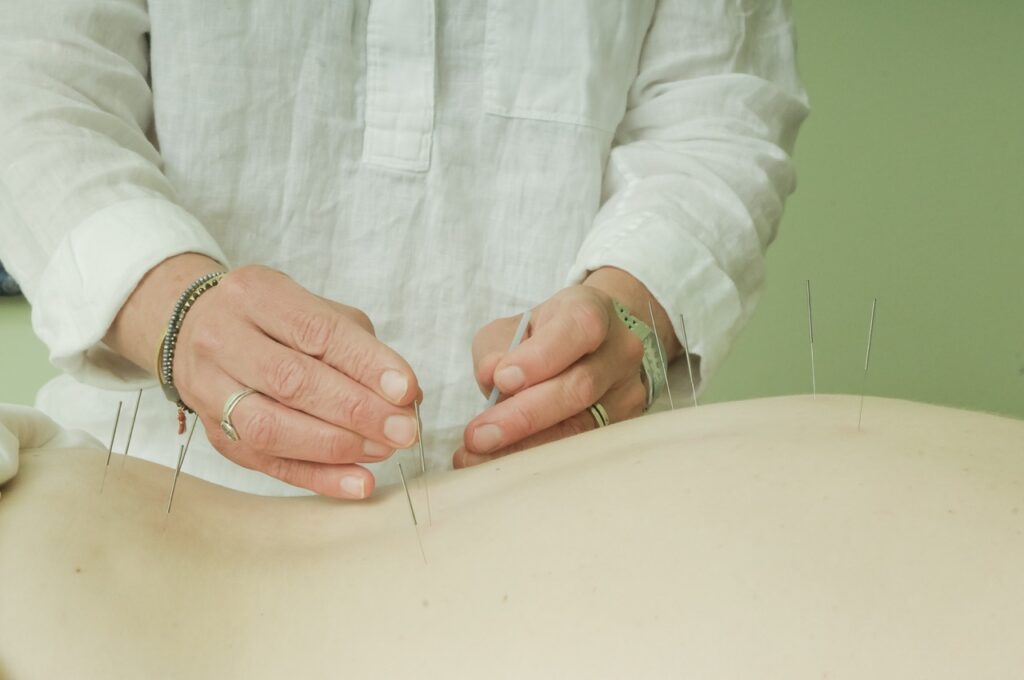
- Weekly acupuncture sessions — with point selection tailored to the specific TCM pattern
- Electroacupuncture — for improved testicular and pelvic blood flow
- Custom Chinese herbal formula — often incorporating classic Kidney-tonifying formulas adapted to the individual pattern
- Targeted antioxidant and micronutrient protocol — typically including CoQ10 (ubiquinol 200–600 mg/day), vitamin C, vitamin E, zinc, selenium, L-carnitine, and DHA — ordered through our Fullscript pharmacy
- Lifestyle guidance — heat avoidance (no hot tubs, saunas, laptops on the lap, tight underwear), tobacco cessation, alcohol reduction, sleep prioritization, weight management if relevant, and stress management
- Nutrition support — including anti-inflammatory diet and specific foods for sperm quality
- Coordination with the female partner’s care if she is also treating with us — including timing protocols around IUI or IVF cycles
When to Start Acupuncture for Male Factor Infertility
The most important thing to understand about male fertility care: spermatogenesis takes approximately 74 days. The sperm ejaculated today began development 2.5 months ago. That is the timeline in which meaningful change happens.
For best results, we recommend:
✔ Begin at least 3 months before trying to conceive or starting IVF/ICSI, if possible
✔ Weekly acupuncture sessions through the preparation period
✔ Continue weekly during active TTC cycles and through IVF stimulation
✔ Repeat the semen analysis at 3 months to measure changes objectively
✔ Consider DNA fragmentation testing at baseline and again at 3 months if elevated at baseline
✔ For men going through IVF, continue support through the cycle — including the day of egg retrieval, when the sperm sample is provided
Clinical Insight from Our Practice
At Acupuncture Denver, our male-factor patients most commonly report:
- objective improvements in sperm concentration, motility, and morphology on 3-month follow-up semen analyses
- reductions in DFI when starting elevated
- better energy, libido, and morning erections
- improved sleep and reduced baseline stress
- a sense of agency in a process where they had felt like a passive supporting player
- better outcomes in IVF/ICSI cycles when both partners have received integrative preparation
We do not promise outcomes — no one ethically can. But we have seen the difference that consistent, targeted care makes for male fertility, especially when started 3+ months before a cycle. Jane, Merry, and Mally are all ABORM board-certified Reproductive Medicine Specialists with two decades of experience working alongside Denver’s leading reproductive endocrinologists and urologists.
Patient Takeaways
If you are the male partner in an infertility journey — or supporting one:
✔ Male factor is involved in 40–50% of infertility cases and is the sole cause in 20–30% — this is not a “women’s issue”
✔ Start with a semen analysis (per AUA/ASRM 2024 Guideline), and consider adding DNA fragmentation testing if the standard analysis is normal but conception has been elusive
✔ Sperm production takes ~74 days — plan for at least 3 months of consistent preparation
✔ Acupuncture has evidence-supported effects on sperm motility, concentration, and oxidative stress
✔ The mechanism story is strongest for oxidative stress reduction, HPT-axis regulation, testicular blood flow, and stress physiology
✔ Acupuncture pairs well with urology care — especially for varicocele, hormonal issues, and IVF/ICSI cycles
✔ Lifestyle changes matter — heat avoidance, sleep, alcohol reduction, tobacco cessation, and antioxidants can all measurably shift the picture
Considering Acupuncture for Male Factor Infertility?
If you are the male partner in a couple trying to conceive — naturally, with IUI, or with IVF/ICSI — acupuncture may be a meaningful part of your plan. At Acupuncture Denver, we will design a personalized protocol around your:
- semen analysis parameters and any DNA fragmentation results
- hormone panel and any urologic evaluation
- specific TCM pattern
- timeline and treatment plan (natural, IUI, IVF/ICSI)
- lifestyle, stress, and daily nervous-system load
👉 Schedule your consultation to begin a personalized plan for male fertility support.
If your partner is also being treated with us, we can coordinate care so that both of you are optimized around the same timeline.
Frequently Asked Questions
Can acupuncture really improve sperm quality?
Yes — and the evidence is meaningful. A 2023 network meta-analysis in Aging found acupuncture significantly improved sperm total motility (MD 17.81; 95% CI 10.32–25.29) and progressive motility (MD 3.95; 95% CI 3.23–4.67). A 2014 systematic review found acupuncture increased sperm concentration (MD 6.42) and rapid-progression motility (MD 6.35). A 2024 electroacupuncture RCT showed further improvements in total motile sperm count. The mechanism story — oxidative stress reduction, testicular blood flow, HPT-axis modulation — is well-supported.
How long does acupuncture take to improve sperm quality?
Spermatogenesis takes ~74 days, so meaningful changes in a semen analysis typically require at least 3 months of consistent treatment. Some men see partial improvements sooner, and DNA fragmentation can shift somewhat faster because oxidative stress responds quickly. We recommend repeating the semen analysis at 3 months to measure changes objectively.
How often should I get acupuncture for male factor infertility?
Most of our male-factor patients receive one acupuncture session per week for the initial 3–6 month course. Frequency may be adjusted around IUI or IVF cycles, with additional sessions during IVF stimulation and around egg retrieval.
What is sperm DNA fragmentation and why does it matter?
Sperm DNA fragmentation (SDF) measures the percentage of sperm with damaged DNA. It is not included in a standard semen analysis but can be tested separately (typically as a DNA Fragmentation Index, or DFI). Elevated SDF is associated with lower fertilization rates, poorer embryo development, higher miscarriage risk, and reduced IVF success. It is driven largely by oxidative stress, which is why acupuncture, antioxidants, and lifestyle changes can meaningfully improve it.
Should I do acupuncture if we’re planning IVF or ICSI?
Yes — ideally, starting at least 3 months before the cycle so the sperm being retrieved has been through a full spermatogenesis window with integrative support. Continue weekly through stimulation and around the day of retrieval. This is particularly important if the female partner has had prior recurrent pregnancy loss or unexplained infertility, where subclinical male factor may be a contributor.
Can acupuncture help with varicocele?
Acupuncture may help with pain, blood flow, and inflammation associated with varicocele, but it does not correct the underlying vascular abnormality. Varicocele is the most common surgically correctable cause of male infertility, and evaluation by a urologist is important. For men who choose surgical repair, acupuncture can support recovery and coordinate with the post-op sperm-quality window.
What lifestyle changes matter most for sperm quality?
The highest-impact changes: avoid heat exposure (hot tubs, saunas, laptops on lap, tight underwear), stop or reduce alcohol, stop tobacco and cannabis, prioritize sleep (7.5–9 hours), manage weight, exercise moderately (not overtrain), reduce chronic stress, and eat an antioxidant-rich diet with adequate zinc, selenium, and healthy fats. Small changes compound over the 74-day sperm cycle.
Is acupuncture safe for men?
Yes, when performed by a licensed, board-certified practitioner using sterile single-use needles. All Acupuncture Denver practitioners are NCCAOM board-certified and ABORM fertility-certified. Sessions typically last 30–45 minutes with needles retained while you rest. Many men find the treatments deeply relaxing.
Do you use Chinese herbs for male factor infertility?
Often, yes. We have a full Chinese herbal pharmacy and create custom formulas tailored to each patient’s TCM pattern — most commonly Kidney Yang tonification protocols for low counts, Blood-moving formulas for varicocele patterns, or clearing formulas for Damp-Heat presentations. All herbs are screened for safety with any medications you may be taking.
References
- American Urological Association / American Society for Reproductive Medicine. (2024). Diagnosis and Treatment of Infertility in Men: AUA/ASRM Guideline (2020; Amended 2024). Journal of Urology.
- Ferlin, A., et al. (2024). Updates to Male Infertility: AUA/ASRM Guideline (2024). Journal of Urology.
- Boitrelle, F., et al. (2021). The Sixth Edition of the WHO Manual for Human Semen Analysis: A Critical Review and SWOT Analysis. Life, 11(12), 1368.
- World Health Organization. (2021). WHO Laboratory Manual for the Examination and Processing of Human Semen, Sixth Edition.
- (2023). Effectiveness of non-pharmaceutical intervention on sperm quality: a systematic review and network meta-analysis. Aging.
- Budihastuti, U. R., et al. (2024). Effect of electroacupuncture on total motile sperm count and sperm motility. Journal of Public Health Research.
- Jerng, U. M., et al. (2014). The effectiveness and safety of acupuncture for poor semen quality in infertile males: a systematic review and meta-analysis. Asian Journal of Andrology.
- Levine, H., et al. (2023). Temporal trends in sperm count: a systematic review and meta-regression analysis of samples collected globally in the 20th and 21st centuries. Human Reproduction Update.
- (2021). The combined effect of lifestyle intervention and antioxidant therapy on sperm DNA fragmentation and seminal oxidative stress in IVF patients: a pilot study. Central European Journal of Urology.
- Barbonetti, A., et al. (2022). Statistical foundation of the reference population for semen analysis included in the sixth edition of the WHO manual: a critical reappraisal of the evidence. Human Reproduction.
Medical disclaimer: This article is for educational purposes only and is not a substitute for personalized medical care. Male factor infertility should be evaluated by a urologist or reproductive endocrinologist. Acupuncture and Chinese herbal medicine should be provided by a licensed, board-certified practitioner with advanced fertility training, in coordination with your medical team.