Stress, Cortisol, and Fertility: An Evidence-Based Guide to How Acupuncture May Help You Conceive
By Jane Gregorie, M.S., L.Ac., FABORM Owner & Clinic Director
Introduction
If you have been trying to conceive for any length of time, you have almost certainly heard some version of the most aggravating sentence in fertility: “Just relax — it will happen.”
Let us start by saying clearly: infertility is not caused by failing to relax, and being told you are the reason you have not conceived is exhausting, isolating, and almost always wrong. Stress did not cause your infertility — and “relaxing” is not a treatment plan.
But — and this is the more nuanced truth — chronic stress does meaningfully affect the systems that govern fertility. Decades of research, including several large prospective studies and a 2024 systematic review of stress across every stage of IVF, support real biological links between the stress response and conception. And the good news: those same studies — combined with growing mechanistic evidence on acupuncture, cortisol, and the autonomic nervous system — suggest that stress is one of the most modifiable contributors to fertility outcomes.
This post is for you if you are:
- trying to conceive and watching a stressful job, life transition, or fertility journey ratchet up your baseline
- in IVF and reading conflicting information about whether stress affects outcomes
- recovering from recurrent loss or an unexplained infertility diagnosis and wondering how much your stress level is contributing
- managing a fertility-affecting condition like PCOS, endometriosis, or low ovarian reserve — all of which are aggravated by chronic stress
- over 35 and feeling the timeline pressure of advancing maternal age
At Acupuncture Denver, we have spent two decades helping women calm the physiology of fertility while pursuing real medical care. This guide walks through what the research actually says, the biology of how stress affects conception, the evidence for acupuncture as a stress-reduction intervention, and what a personalized plan looks like in our clinic.
Does Stress Actually Affect Fertility?
The honest, evidence-based answer is: yes, but not in the way most people frame it.
The “stress causes infertility” headline overstates the data. The “stress has nothing to do with it” reassurance understates it. The truth lives in the prospective biomarker studies.
The LIFE Study (2014)
The largest U.S. prospective preconception cohort study of stress and fertility — the LIFE Study — followed 501 couples for up to 12 months as they tried to conceive, measuring salivary stress biomarkers at enrollment. The headline finding:
Women in the highest tertile of salivary alpha-amylase (a marker of sympathetic nervous system activation) had a 29% reduction in fecundity — translating into a more than 2-fold increased risk of infertility (Lynch et al., 2014, Human Reproduction).
Importantly, the study found no significant association between salivary cortisol and fecundability. Translation: it is not stress per se but rather chronic sympathetic (“fight or flight”) activation that maps onto reduced fertility.
Stress Reduces Conception Probability Across the Fertile Window
An earlier UK prospective study of 274 women trying to conceive — collecting daily saliva samples — found that women with higher salivary alpha-amylase had a significantly lower probability of conception across the fertile window, with effects concentrated in the highest stress tertile (Louis et al., 2010, Fertility and Sterility).
Stress and IVF Outcomes
A 2024 systematic review in International Journal of Molecular Sciences analyzed 36 studies examining chronic and acute stress across every stage of IVF. The synthesis:
- Egg retrieval was the stage most affected by both chronic and acute stress — with higher stress associated with fewer eggs retrieved and lower-quality oocytes
- Fertilization showed an association with chronic stress (smaller effect)
- Embryo transfer and clinical pregnancy showed weaker but still detectable associations with chronic stress
- Follicular fluid cortisol showed a complex relationship — higher levels actually associated with some better outcomes, suggesting that acute stress within the cycle differs from chronic baseline stress
(Pereira et al., 2024, Int J Mol Sci)
The Mind-Body Evidence
The flip side of the stress data is the intervention data. Dr. Alice Domar’s pioneering work at Harvard Medical School and Boston IVF showed that women who completed a 10-week mind-body fertility program — combining relaxation response training, cognitive behavioral therapy, group support, and lifestyle education — had live-birth rates substantially higher than controls. A subsequent 2024 RCT in Human Reproduction tested the active ingredients of the Mind/Body Program for Infertility and confirmed effects on wellbeing and assisted reproduction outcomes (Ockhuijsen et al., 2024, Human Reproduction).
The takeaway: stress can be a factor — and stress reduction can improve outcomes. Both are true.
The Biology: How Stress Affects Fertility
The HPA-HPO crosstalk is one of the most well-documented examples of how the stress system interferes with the reproductive system. Here is what happens biologically.
Step 1: Stress activates the HPA axis
When you perceive a stressor — physical, emotional, work, financial, or fertility-related — the hypothalamus releases corticotropin-releasing hormone (CRH), which triggers the pituitary to release ACTH, which triggers the adrenals to release cortisol and to ramp up sympathetic (“fight or flight”) output.
Step 2: CRH and cortisol suppress the HPO axis
Elevated CRH from the hypothalamus directly suppresses gonadotropin-releasing hormone (GnRH) — the master reproductive hormone. Reduced GnRH means reduced luteinizing hormone (LH) and follicle-stimulating hormone (FSH) from the pituitary, which means:
- weaker follicle development
- delayed or absent ovulation
- shorter or weaker luteal phases
- lower progesterone production
Step 3: Cortisol affects egg quality and the uterine environment
Chronically elevated cortisol contributes to:
- oxidative stress in developing follicles (impacting egg quality)
- systemic and pelvic inflammation
- reduced uterine artery blood flow through sympathetic-driven vasoconstriction
- impaired endometrial receptivity — the implantation window depends on a precise hormonal and immune environment that chronic cortisol disrupts
Step 4: Stress disrupts immune balance relevant to implantation and early pregnancy
Chronic HPA-axis activation shifts immune balance in ways that may contribute to implantation failure and early pregnancy loss — particularly relevant for women with recurrent pregnancy loss or recurrent implantation failure.
Step 5: Sympathetic dominance constricts pelvic blood flow
Beyond cortisol, chronic sympathetic activation reduces uterine and ovarian blood flow through vasoconstriction. Stener-Victorin’s classic electroacupuncture studies demonstrated that uterine artery blood flow impedance can be measurably reduced — partly by shifting the autonomic nervous system out of sympathetic dominance.
Why Alpha-Amylase Is the Better Stress Marker
If you have read this far and wondered why some studies show “stress doesn’t affect fertility” while others clearly do — the answer often comes down to what they measured. Salivary cortisol captures one dimension of the HPA axis but is noisy across the day and not always reflective of chronic load. Salivary alpha-amylase is a better marker of sympathetic (“fight or flight”) activation, and it is the marker that has most consistently shown associations with reduced fecundity.
The clinical implication: it is not just “feeling stressed” that matters — it is the cumulative load on your nervous system over months or years. Which is exactly what acupuncture is well-suited to shift.
How Acupuncture May Help (Biological Perspective)
Acupuncture is one of the most-studied nonpharmacological interventions for the stress response. The mechanisms most relevant to fertility:
1. Shifting the Autonomic Nervous System
Acupuncture activates the parasympathetic (“rest and digest”) branch of the autonomic nervous system and dampens sympathetic dominance. This is the single most fertility-relevant effect, given that sympathetic activation — measured by alpha-amylase — is the strongest stress marker linked to reduced fecundity in prospective studies.
This shift can be observed in heart rate variability (HRV), pupil response, salivary biomarkers, and cortisol — within a single treatment as well as cumulatively over weeks (Teton AIM clinical review, 2024).
2. Lowering Cortisol and Modulating the HPA Axis
A growing body of evidence shows acupuncture can lower cortisol and modulate the HPA axis — particularly in the context of fertility and IVF. A 2022 RCT in Psychoneuroendocrinology found that acupuncture in women undergoing IVF significantly decreased cortisol levels and was associated with improved pregnancy outcomes.
A 2025 review in The American Journal of Medicine on HPA-axis dysfunction explicitly identifies acupuncture as a clinically validated tool for HPA modulation, noting it influences key components of the HPA axis including neurotransmitters, neuropeptides, and hormone receptors (Goldman et al., 2025, Am J Med).
3. Supporting GnRH and the Reproductive Axis
By lowering CRH-driven suppression of the HPO axis, acupuncture indirectly supports GnRH pulsatility — and therefore healthier LH, FSH, ovulation, and luteal phase. This is one of the mechanisms most relevant to women with PCOS, irregular cycles, or unexplained infertility.
4. Improving Pelvic Blood Flow
A core element of fertility-focused acupuncture — especially electroacupuncture on lower-abdominal and lumbosacral points — is reducing uterine artery blood flow impedance. By shifting the autonomic nervous system and directly stimulating pelvic circulation, acupuncture works on both upstream and downstream contributors to uterine receptivity.
5. Reducing Inflammation
Chronic stress drives systemic inflammation through HPA-axis dysregulation and altered cytokine production. Acupuncture has documented anti-inflammatory effects via vagal nerve activation — sometimes called the “cholinergic anti-inflammatory pathway.” For women with stress-driven inflammation contributing to fertility challenges, this is one of the more meaningful mechanisms (Frontiers in Endocrinology scoping review, 2024).
6. Improving Sleep and Restoration
Stress almost always degrades sleep — and poor sleep further disrupts the HPA-HPO axis. Acupuncture has been repeatedly shown to improve sleep quality in randomized trials, which creates a positive feedback loop with the rest of the reproductive system.
What the Research Says About Acupuncture, Stress, and Fertility Outcomes
The evidence base for acupuncture, stress, and fertility outcomes has several overlapping threads:
Acupuncture as a stress-reduction intervention in fertility patients
Multiple RCTs have shown that acupuncture reduces anxiety, depression, and physiologic stress markers in women undergoing fertility treatment. The 2022 Psychoneuroendocrinology RCT specifically demonstrated reduced cortisol and improved pregnancy outcomes in women receiving acupuncture during IVF.
Acupuncture as an IVF adjunct
A 2024 meta-analysis of 25 RCTs and 4,757 participants found higher clinical pregnancy rates (43.6% vs 33.2%) and live birth rates (38.0% vs 28.7%) with acupuncture as an IVF adjunct (Xu et al., 2024, Arch Gynecol Obstet). The mechanism story is multifactorial, but stress reduction is one of the most plausible pathways.
A 2025 network meta-analysis in Frontiers in Endocrinology on acupuncture treatment schedules for ART confirmed that the timing and frequency of acupuncture during a cycle meaningfully affects outcomes (Frontiers in Endocrinology, 2025).
Mind-body programs and conception
The Domar mind-body fertility program at Harvard/Boston IVF — incorporating relaxation response training, CBT, group support, and lifestyle work — has shown roughly 2–3x improvements in pregnancy/live birth rates compared to controls. A 2024 Human Reproduction RCT tested the program’s active components and confirmed effects on wellbeing and assisted reproduction outcomes (Ockhuijsen et al., 2024).
What it all means
Translation for you: the evidence does not support telling anyone “your stress is causing your infertility.” It does support including stress-reduction tools — including acupuncture, mind-body work, sleep, and nervous-system regulation — as a real part of an integrative fertility plan.
Traditional Chinese Medicine Perspective on Stress and Fertility
In Traditional Chinese Medicine, stress and emotional load are recognized as drivers of organ-system imbalance — and fertility patterns are no exception. The most relevant patterns:
Liver Qi Stagnation
The single most common stress-related fertility pattern. Associated with:
- premenstrual irritability, breast tenderness, headaches
- cycle disruption around stressful periods
- “wired but tired,” restless sleep, jaw tension
- mid-cycle spotting or short luteal phase
- worsening symptoms during fertility cycles
Treatment smooths Liver Qi, calms the nervous system, and is often the first layer of care for women with high-stress jobs, demanding lives, or significant TTC anxiety.
Liver Qi Stagnation with Heat
When Liver Qi stagnation has been building for a long time, it generates Heat — which presents as:
- significant anxiety or panic patterns
- shorter cycles, mid-cycle bleeding
- night sweats unrelated to cycle phase
- skin breakouts, sleep that breaks at 2–4 a.m.
Treatment regulates Liver Qi and clears reactive Heat — often with calming, cooling herbal formulas.
Heart-Kidney Disconnection (Shen Disturbance)
When chronic stress disrupts the deep nervous system, it shows up as:
- racing thoughts at bedtime, anxiety about anxiety
- difficulty staying asleep
- “frozen” or numb emotional patterns
- the trauma signature of recurrent loss or long fertility journeys
Treatment calms the Shen (spirit/mind) and reconnects upper and lower body — one of the most healing interventions in chronic-stress fertility.
Kidney Yin Deficiency with Empty Heat
Common in women with long-standing stress and aging-related cycle changes. Associated with:
- night sweats, dry skin, irritability
- shorter cycles, lower estrogen
- the “running on fumes” presentation
Treatment nourishes Kidney Yin and clears empty heat.
Spleen Qi Deficiency
Stress that has been processed through over-functioning rather than emotional release. Associated with:
- digestive symptoms, fatigue, sugar cravings
- “I just push through” pattern
- weak luteal phase or thin uterine lining
Treatment strengthens Spleen Qi and supports the body’s nourishing function.
Most women with stress-driven fertility patterns present with combinations of these — most commonly Liver Qi stagnation layered onto an underlying constitutional pattern. Identifying the layers is what allows a board-certified fertility acupuncturist to design a plan that actually moves the needle.
What a Personalized Stress + Fertility Plan Looks Like at Acupuncture Denver
We approach stress-driven fertility patterns as a layered, multi-system protocol:
- Comprehensive intake and TCM pattern diagnosis — including a careful look at sleep, work stress, life transitions, prior trauma, and the cumulative load of the fertility journey itself
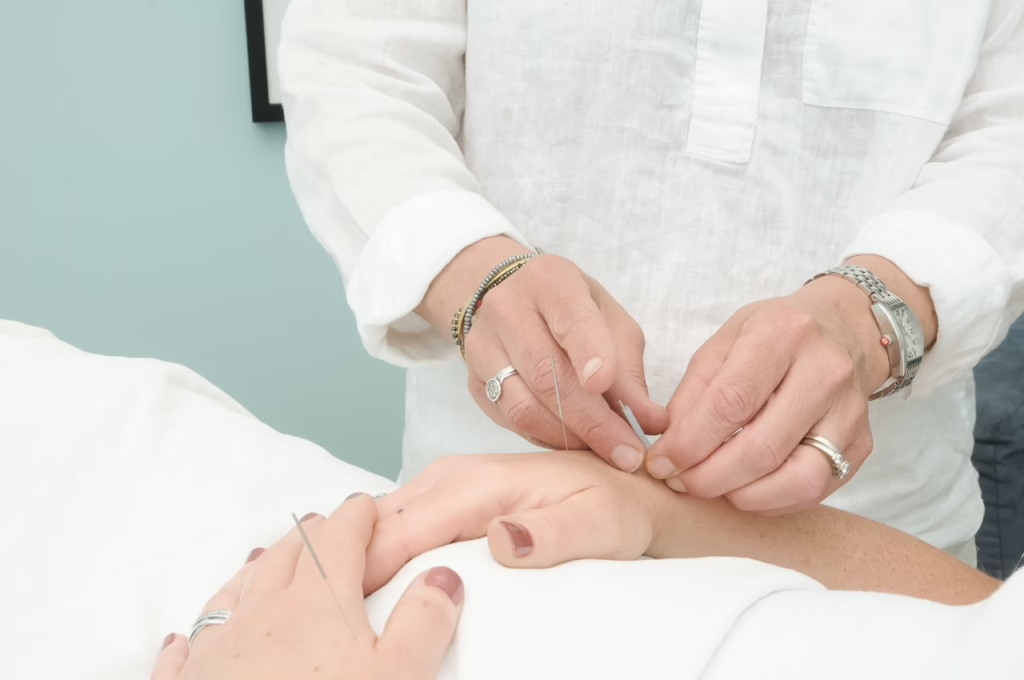
- Weekly acupuncture sessions — with points tailored to nervous-system regulation, reproductive support, and your specific TCM pattern
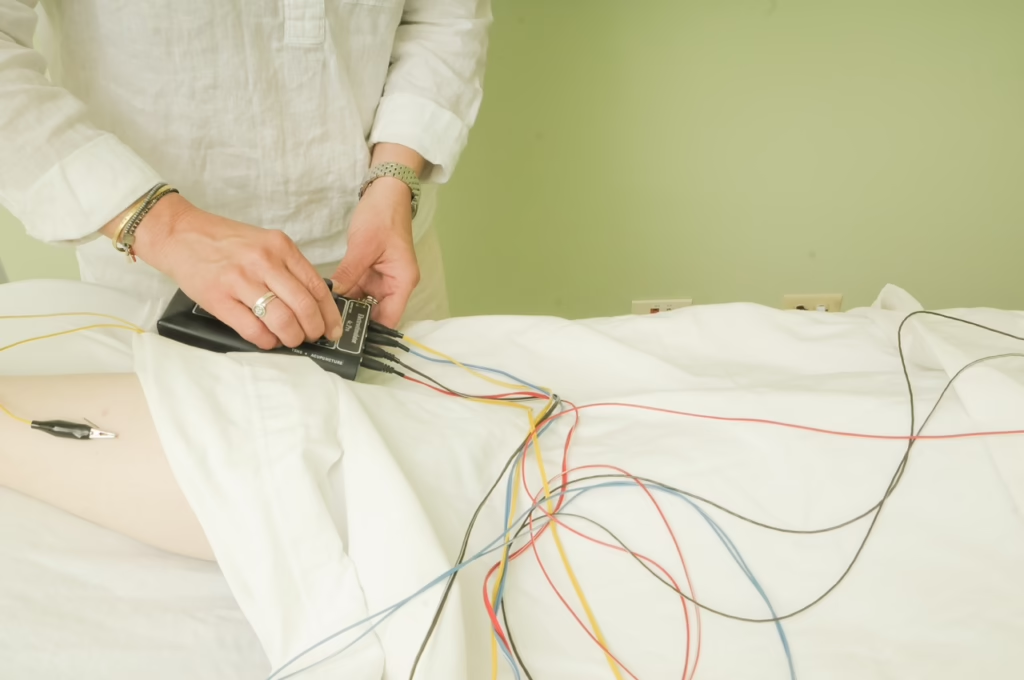
- Electroacupuncture — for pelvic blood flow and direct autonomic shifts
- Custom Chinese herbal formulas — often including formulas like Xiao Yao San (Free and Easy Wanderer) and constitutional support, adjusted across cycle phases
- Breathwork and nervous-system tools — including practical home practices you can use during workdays and the two-week wait
- Sleep optimization — sleep is one of the most under-leveraged fertility interventions
- Fertility-enhancing massage (FEM) — for parasympathetic activation and pelvic circulation
- Red light therapy and infrared sauna — for additional nervous-system and mitochondrial support
- Targeted supplements — magnesium, vitamin D, omega-3s, adaptogens when appropriate, ordered through our Fullscript pharmacy
- Mind-body referrals — including therapists familiar with fertility-related grief and anxiety
- Access to our free monthly women’s infertility support group — community is one of the most powerful stress-reduction tools we have
- Coordination with your reproductive endocrinologist or OB-GYN when applicable
When to Start Acupuncture for Stress-Driven Fertility Patterns
For stress patterns, acupuncture often produces noticeable subjective shifts within 2–4 sessions — better sleep, calmer baseline, less premenstrual reactivity. For deeper cycle and reproductive changes, plan for at least 3 menstrual cycles of consistent care.
For best results, we suggest:
✔ Begin 3–6 months before trying to conceive or starting IVF, if possible
✔ Weekly acupuncture sessions through the preparation period
✔ Continue weekly during TTC cycles — especially during the two-week wait, where anxiety often peaks
✔ Intensify around IVF — particularly during controlled ovarian stimulation, where stress evidence is strongest
✔ Maintain through the first trimester if you conceive, given the higher nervous-system load of early pregnancy after fertility challenges
Clinical Insight from Our Practice
At Acupuncture Denver, patients receiving stress-focused fertility care most commonly report:
- noticeably calmer baseline within 3–4 sessions
- meaningfully better sleep within a month
- less premenstrual reactivity
- smoother cycles, stronger luteal phases
- a sense of having tools — not just being told to “relax”
- when they conceive, a calmer, more supported first trimester
We do not promise outcomes — no one ethically can. But we have seen the difference that intentional nervous-system care makes for women trying to conceive, particularly those who have been carrying years of cumulative stress. Jane, Merry, and Mally are all ABORM board-certified Reproductive Medicine Specialists.
Patient Takeaways
If you have been wondering whether stress is affecting your fertility:
✔ Stress did not cause your infertility — and “just relax” is not a treatment plan
✔ Chronic sympathetic (“fight or flight”) activation is associated with reduced fecundity in large prospective studies — particularly when measured by salivary alpha-amylase
✔ Stress affects egg retrieval most clearly in IVF, with smaller effects across fertilization and implantation
✔ Mind-body programs and acupuncture have evidence-supported effects on stress biomarkers andpregnancy outcomes
✔ Acupuncture works on multiple stress mechanisms: parasympathetic activation, cortisol modulation, GnRH support, pelvic blood flow, inflammation, and sleep
✔ Plan for at least 3 menstrual cycles of consistent care for cumulative reproductive benefits
✔ Acupuncture pairs well with conventional fertility care, mind-body programs, and mental-health support
Considering Acupuncture for Stress-Driven Fertility?
If you have been carrying a lot — work, family, prior losses, a long fertility journey, or just the weight of trying to conceive — acupuncture may be a meaningful part of how you regulate the systems that govern fertility. At Acupuncture Denver, we will design a personalized plan around your:
- specific stress pattern (sympathetic dominance, Liver Qi stagnation, Shen disturbance, etc.)
- cycle and reproductive picture
- TTC timeline and treatment plan
- sleep, energy, and daily nervous-system load
👉 Schedule your fertility consultation to begin a personalized stress + fertility plan.
You are also warmly invited to our free monthly women’s infertility support group — a community space we have held for nearly 20 years for women navigating exactly these questions.
Frequently Asked Questions
Can stress cause infertility?
Stress does not directly cause infertility, but chronic sympathetic nervous system activation — measurable through salivary alpha-amylase — is associated with reduced fecundity in large prospective studies, including the 2014 LIFE Study. Women in the highest tertile of alpha-amylase showed a 29% reduction in fecundity. So while stress is not the cause of an infertility diagnosis, it can be a contributing factor — and one of the most modifiable.
How does cortisol affect fertility?
Chronically elevated cortisol — driven by HPA-axis activation — suppresses the reproductive HPO axis through elevated CRH, which reduces GnRH, LH, and FSH. Downstream effects include weaker ovulation, shorter luteal phases, reduced uterine blood flow, increased inflammation, and impaired endometrial receptivity. Interestingly, single-point salivary cortisol measurements are noisy — alpha-amylase is a more consistent stress biomarker linked to fertility outcomes.
Does acupuncture really reduce cortisol and fertility stress?
Yes — multiple randomized controlled trials show acupuncture reduces cortisol, anxiety, and depression scores in women undergoing fertility treatment. A 2022 RCT in Psychoneuroendocrinology found significant cortisol reductions and improved pregnancy outcomes with acupuncture during IVF. A 2025 American Journal of Medicine review on HPA-axis dysfunction explicitly identifies acupuncture as a clinically validated HPA modulator.
How long does acupuncture take to work for stress?
Most patients notice a calmer baseline, better sleep, and less reactivity within 2–4 sessions. Deeper reproductive changes — cycle regulation, stronger luteal phases, improved IVF response — typically require at least 3 menstrual cycles of consistent care.
Does stress lower IVF success rates?
The 2024 systematic review in International Journal of Molecular Sciences of 36 studies found that chronic and acute stress most strongly affect the egg retrieval stage of IVF — with smaller but detectable effects on fertilization and clinical pregnancy. The relationship is real but nuanced, and acute stress during the cycle differs from chronic baseline stress.
Will stress make me miscarry?
Stress alone does not cause miscarriage, and women who experience pregnancy loss are not to blame for their stress level. That said, chronic HPA-axis dysregulation can affect implantation and immune balance — both of which are relevant to early pregnancy. For women with recurrent pregnancy loss, stress-reduction tools are one component of an integrative plan, not the cure.
Are mind-body programs like Dr. Domar’s worth it?
The Domar mind-body program at Harvard / Boston IVF — combining relaxation response training, CBT, group support, and lifestyle education — has shown roughly 2–3x improvements in pregnancy and live birth rates compared to controls. A 2024 Human Reproduction RCT confirmed effects on wellbeing and ART outcomes. Mind-body work and acupuncture are highly complementary — most of our patients do both.
What stress-reduction techniques do you recommend at home?
The most evidence-supported home practices for fertility-related stress are: slow paced breathing (~5–6 breaths/min for 10+ min), moderate aerobic exercise (without overtraining), prioritized sleep (7.5–9 hours), time outdoors (~20 min/day), community/connection, and structured limits on fertility-related research and social media. Our clinic provides personalized home-practice prescriptions during your sessions.
Is acupuncture safe to combine with mental-health treatment for fertility?
Yes — they are highly complementary, and we often refer to or coordinate with fertility-aware therapists. Acupuncture is not a substitute for mental-health care, especially if you are experiencing significant anxiety, depression, or trauma symptoms. If you are struggling, please reach out to a licensed mental-health professional in addition to integrative care.
References
- Lynch, C. D., et al. (2014). Preconception stress increases the risk of infertility: results from a couple-based prospective cohort study—the LIFE study. Human Reproduction, 29(5), 1067–1075.
- Louis, G. M., et al. (2010). Stress reduces conception probabilities across the fertile window: evidence in support of relaxation. Fertility and Sterility.
- Pereira, A. C., et al. (2024). Effect of Stress on Each of the Stages of the IVF Procedure: A Systematic Review.International Journal of Molecular Sciences, 25(2), 726.
- (2025). An Integrative Approach to HPA Axis Dysfunction: From Recognition to Recovery. The American Journal of Medicine.
- Ockhuijsen, H., et al. (2024). Clinical effectiveness of the Mind/Body Program for Infertility on wellbeing and assisted reproduction outcomes: a randomized controlled trial in search for active ingredients. Human Reproduction, 39(8), 1735–1748.
- Xu, M., Zhu, M., & Zheng, C. (2024). Effects of acupuncture on pregnancy outcomes in women undergoing in vitro fertilization: an updated systematic review and meta-analysis. Archives of Gynecology and Obstetrics, 309(3), 775–788.
- (2025). Different effectiveness of acupuncture treatment schedule on ART pregnancy outcomes: a systematic review and network meta-analysis. Frontiers in Endocrinology.
- (2024). Trends in acupuncture for infertility: a scoping review with bibliometric and visual analysis. Frontiers in Endocrinology.
- Smeenk, J. M., et al. (2019). Does stress affect IVF outcomes? A prospective study of physiological and psychological stress in women undergoing IVF. Reproductive BioMedicine Online.
- Boivin, J., et al. The association of physiological cortisol and IVF treatment outcomes: a systematic review.PMC5907129.
Medical disclaimer: This article is for educational purposes only and is not a substitute for personalized medical or mental-health care. If you are experiencing significant anxiety, depression, grief, or trauma symptoms, please reach out to a licensed mental-health professional in addition to integrative care. Acupuncture and Chinese herbal medicine should be provided by a licensed, board-certified practitioner with advanced fertility training, in coordination with your reproductive endocrinologist or OB-GYN.