By Jane Gregorie, M.S., L.Ac., FABORM
Owner & Clinic Director
Introduction
Fertility is not a single system. It is the coordinated function of the brain, the ovaries, the uterus, the immune system, blood flow, mitochondrial energy production, and hormonal signaling — all against a backdrop of stress, nutrition, and sleep. The most effective fertility care works on more than one of these systems at once.
At Acupuncture Denver, we combine four evidence-supported modalities — acupuncture, Chinese herbal medicine, red light therapy, and dietary therapy — because each addresses a different piece of the puzzle. Together they are considerably more than the sum of their parts, and they pair cleanly with anything your reproductive endocrinologist or OB may prescribe.
This is the pillar post that maps out our whole approach. Whether you are:
- trying to conceive naturally
- preparing for IUI or IVF
- navigating a specific diagnosis like PCOS, endometriosis, low ovarian reserve, unexplained infertility, or recurrent pregnancy loss
- over 35 and feeling the timeline
- addressing male factor infertility as part of a couple
…this framework is the substrate for everything else we do.
The Four Pillars at a Glance
Each pillar addresses a different physiological pathway. Most patients use all four; some emphasize two or three based on their situation and preferences.
| Pillar | What it does |
|---|---|
| 1. Acupuncture | Regulates the HPO axis, improves ovarian and uterine blood flow, and shifts the nervous system into a state where reproduction is possible. |
| 2. Chinese Herbal Medicine | Individualized formulas that treat the underlying constitutional pattern between visits. Sustained action, dosed 2× daily. |
| 3. Red Light Therapy | Photobiomodulation of ovarian mitochondria — supports egg quality, particularly in patients with diminished ovarian reserve or advanced maternal age. |
| 4. Dietary Therapy | Food as the daily foundation. Anti-inflammatory, blood-building, blood-sugar-stable eating shifts the biochemistry all four systems live in. |
A Word on Timing
Egg development takes roughly 90 days from primordial-follicle awakening to ovulation. Sperm production runs 72–90 days. This is why we aim for a minimum 3-month runway of consistent care before conception attempts or an IVF cycle — you are influencing the eggs and sperm that will be ready three months from today.
Longer runways (6–12 months) matter more with:
Pillar 1 — Acupuncture
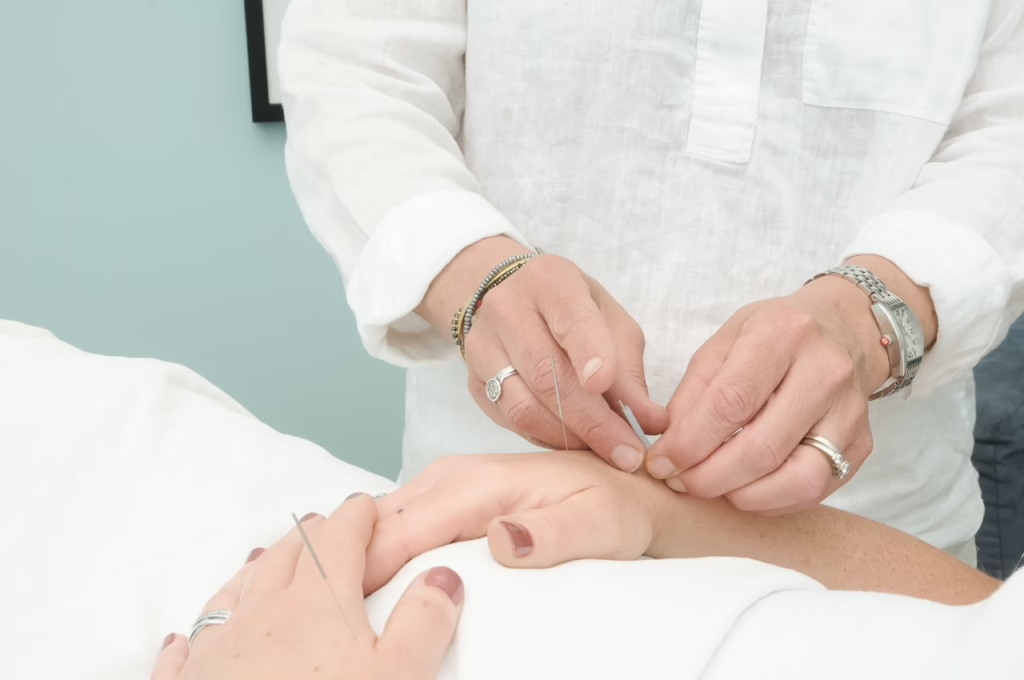
Acupuncture is the most-studied complementary modality for fertility. Its effects are well-documented across four mechanistic domains that matter for reproduction.
How it works
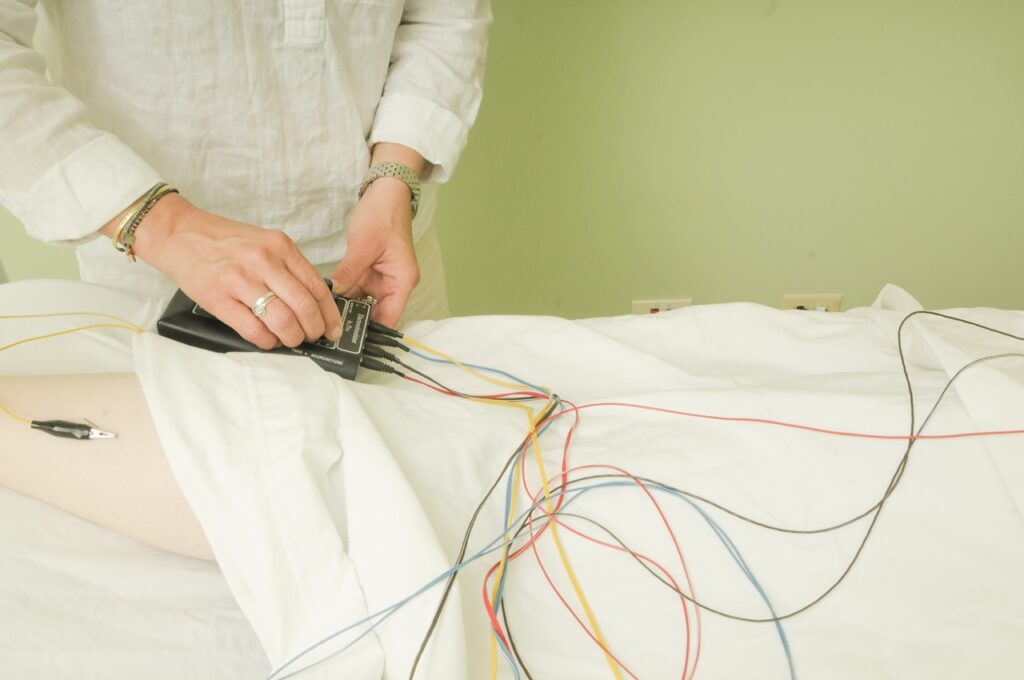
- Improved ovarian and uterine blood flow. Low-frequency electroacupuncture has been shown to reduce uterine artery blood flow impedance on Doppler ultrasound (Stener-Victorin et al., 1996, Human Reproduction, with follow-up work through 2010). Better perfusion means a better follicular environment and better endometrial receptivity.
- HPO-axis regulation. Acupuncture modulates GnRH signaling, beta-endorphin release, and LH pulsatility — especially relevant in PCOS, functional hypothalamic patterns, and stress-related cycle irregularities.
- Stress and cortisol reduction. Acupuncture reliably shifts autonomic balance toward parasympathetic dominance. Chronic sympathetic tone is associated with worse reproductive outcomes across both natural and ART cycles — see our companion post on acupuncture for stress and fertility.
- Immune modulation. Modulates cytokine profiles relevant to immune tolerance at implantation. Emerging role in unexplained recurrent pregnancy loss.
The evidence
- Paulus et al. (2002), Fertility and Sterility. The landmark RCT that put acupuncture on the fertility map: clinical pregnancy rates rose from 26% (control) to 43% (acupuncture) when acupuncture was performed before and after embryo transfer (Paulus et al., 2002).
- Manheimer et al. (2008), BMJ. Meta-analysis of 7 RCTs (1,366 patients) — acupuncture around embryo transfer significantly improved clinical pregnancy and live-birth rates (Manheimer et al., 2008, BMJ).
- Smith C. A. et al. (2018), JAMA. The high-profile multicenter Australian/New Zealand RCT comparing acupuncture to sham. Notably, the trial did not show a significant difference between real and sham acupuncture — but both groups outperformed usual-care historical controls, and subsequent secondary analyses and mechanistic work continue to support benefit particularly in poor responders and unexplained subfertility.
- Xu et al. (2024), Archives of Gynecology and Obstetrics. More recent meta-analysis of 25 RCTs and 4,757 participants found clinical pregnancy rates of 43.6% (acupuncture) vs 33.2% (control) and live birth rates of 38.0% vs 28.7% (Xu et al., 2024).
Our typical acupuncture protocol
| Phase | Frequency |
|---|---|
| Baseline / trying naturally | 1× weekly for a minimum of 3 months; 2× weekly if diminished ovarian reserve, endometriosis, or advanced maternal age |
| IVF preparation | 2× weekly for 4 weeks leading up to retrieval; continued through stim |
| Day of embryo transfer | 1 treatment before + 1 after (Paulus protocol). On-site at Conceptions and Kindbody, or in clinic prior to FET time |
| Early pregnancy | 1× weekly through week 12 (with the 7-day post-FET pause for IVF cycles) |
Pillar 2 — Chinese Herbal Medicine
Chinese herbs sustain a therapeutic action between acupuncture visits and can be adjusted every 2–4 weeks as your body responds. They are individualized to your constitutional pattern — the same fertility diagnosis (say, diminished ovarian reserve) may be treated with different formulas depending on whether your presentation is Kidney Yang deficiency, Kidney Yin deficiency, Blood deficiency, or Blood stasis.
The evidence
- Ried & Stuart (2011), Complementary Therapies in Medicine. Meta-analysis of 8 RCTs and 13 cohort studies (>1,850 women) — Chinese herbal medicine over 3–6 months improved clinical pregnancy rates by approximately 2× compared with Western medical treatment or IVF alone (Ried & Stuart, 2011).
- Ried (2015) update, Complementary Therapies in Medicine. Confirmed benefit, particularly in patients with irregular cycles, PCOS, and endometriosis-related infertility.
- Formula-specific research. Multiple RCTs and meta-analyses support Gui Zhi Fu Ling Wan for endometriosis and adenomyosis (Chen 2014; Wang 2020) and the Shou Tai Wan family for threatened miscarriage and unexplained recurrent pregnancy loss (Liu et al., 2013, BMC Complementary and Alternative Medicine).
Common patterns and formulas we use
| Pattern | Foundational formula(s) | Common presentations |
|---|---|---|
| Kidney Yang Deficiency | You Gui Wan; Yu Lin Zhu (“Fertility Pearl”); modifications with Shou Tai Wan | Cold hands and feet, low libido, low basal body temperature, low-back ache, DOR with low AMH |
| Kidney Yin Deficiency | Liu Wei Di Huang Wan; Zuo Gui Wan; modifications | Night sweats, dry mouth, short cycles, high FSH, thin endometrium |
| Blood Deficiency | Si Wu Tang; Ba Zhen Tang; Tai Shan Pan Shi San | Scant or short periods, pale complexion, dizziness, dry skin, fatigue, low ferritin |
| Blood Stasis | Gui Zhi Fu Ling Wan; Tao Hong Si Wu Tang; Xue Fu Zhu Yu Tang | Endometriosis, adenomyosis, fibroids, dark clotted flow, sharp fixed pain |
| Liver Qi Stagnation | Xiao Yao San; Jia Wei Xiao Yao San | PMS, breast tenderness, irregular cycles, stress-driven anovulation, tight shoulders |
| Spleen Qi + Damp (PCOS pattern) | Cang Fu Dao Tan Tang; Gui Zhi Fu Ling Wan + Cang Zhu / Xiang Fu | PCOS with weight gain, insulin resistance, absent or irregular cycles, high AMH |
Sourcing, safety, and coordination
We use GMP-certified herbal suppliers (Plum Flower, KPC, Evergreen, Blue Poppy) with third-party testing for heavy metals, pesticides, and sulfites. Granules are our default form; we also carry capsules or tinctures for convenience.
Formulas are reassessed every 2–4 weeks based on tongue, pulse, and symptoms. Blood-moving formulas (Blood Stasis pattern) are stopped immediately at a positive pregnancy test and replaced with pregnancy-safe alternatives if needed (Shou Tai Wan family). We cross-check every prescription against your medications and IVF-cycle timing.
Pillar 3 — Red Light Therapy
Red light therapy — also called photobiomodulation or low-level laser therapy (LLLT) — is one of the most exciting recent additions to fertility care. Red and near-infrared light penetrate tissue and are absorbed by cytochrome c oxidase in mitochondria, boosting ATP production. In ovarian tissue, this appears to translate to improved egg quality.
For more detail, see our companion post on red light therapy for fertility, pain, and wrinkles and our red light therapy for fertility enhancement page.
The evidence
- Ohshiro (Japan, 2012 and follow-up), Laser Therapy. The most-cited body of work in fertility photobiomodulation. In a series of poor-responder patients (average age 39, previous failed IVF cycles), near-infrared light applied to the head and abdomen produced clinical pregnancy rates comparable to those seen with DHEA supplementation — and in some subgroups, meaningfully higher live-birth rates.
- Preclinical and translational reviews (Fahmy et al., 2018–2022) suggest photobiomodulation reduces oxidative stress in oocytes, improves mitochondrial membrane potential, and may support endometrial receptivity via improved microcirculation.
- The honest caveat. The red-light evidence base is smaller and more heterogeneous than that for acupuncture. Effect sizes look promising, but larger high-quality RCTs are still needed. We use it as a reasonable adjunct — not a substitute for other care.
Our typical red light protocol
| Parameter | Protocol |
|---|---|
| Wavelengths | Combined red (630–660 nm) + near-infrared (810–850 nm) — the two most-studied wavelengths for tissue penetration and mitochondrial effect |
| Placement | Lower abdomen (over the ovaries and uterus) as the primary target; head/neck as a secondary target in some protocols |
| Session length | 15–20 minutes per session (varies by panel type — follow your device instructions) |
| Frequency | 3–5× per week for a minimum of 90 days (one full egg-development cycle) |
| Timing across the cycle | Follicular phase → ovulation → early luteal. Stop abdominal placement once ovulation is confirmed if actively trying. Do not use in confirmed pregnancy over the abdomen |
| Best candidates | Diminished ovarian reserve, advanced maternal age, poor IVF response, thin endometrium, unexplained infertility |
Safety notes
- Do not use over the abdomen in confirmed pregnancy
- Do not shine directly into the eyes; use blocking goggles if the panel provides them
- Avoid direct application over the thyroid unless cleared by your endocrinologist
- Sessions should feel gently warm, not hot — follow the manufacturer’s recommended distance
We use Celluma panels in the clinic and can provide an order code for Fringe red light therapy wraps for home use.
Pillar 4 — Dietary Therapy
Food is the daily foundation everything else rests on. The good news is that modern nutrition research (Chavarro & Willett’s Harvard Fertility Diet), Mediterranean-diet research, and Chinese dietary therapy point in nearly the same direction. The principles are unglamorous but well-supported.
The evidence
- Chavarro & Willett (Harvard Nurses’ Health Study II). Adherence to a “fertility diet” pattern was associated with significantly lower risk of ovulatory infertility. The specific factors: lower trans-fat intake, more monounsaturated fats, more plant protein, more whole grains, more full-fat dairy (specifically), higher iron intake, and multivitamin use (Chavarro et al., 2007, Obstetrics & Gynecology; The Fertility Diet, 2007).
- Mediterranean diet studies. Higher adherence associated with better IVF outcomes, particularly higher clinical pregnancy and live-birth rates (Toledo et al., 2011, Fertility and Sterility; Karayiannis et al., 2018, Human Reproduction).
- Male-factor evidence. Diets rich in fish, vegetables, fruit, nuts, and whole grains are associated with better sperm parameters — concentration, motility, morphology (Salas-Huetos et al., 2017, Human Reproduction Update).
Our core dietary framework
| Emphasize | Minimize |
|---|---|
| Warm, cooked meals as the default | Cold and iced drinks, iced foods |
| Wild-caught fatty fish 2–3× per week (salmon, sardines) | Raw foods as staples (smoothies, salads every day) |
| Cooked dark leafy greens (kale, chard, spinach, collards) | Refined sugar and high-fructose corn syrup |
| Legumes and lentils; plant protein alongside animal | Trans fats and heavily processed vegetable oils |
| Extra-virgin olive oil, avocado, walnuts, almonds | Ultra-processed and packaged foods |
| Full-fat dairy in moderation (Nurses’ Health Study finding) if tolerated | Alcohol (limit to <2 drinks/week when trying; zero during stim / early pregnancy) |
| Berries, sweet potato, squash, seasonal vegetables | Caffeine (<200 mg/day when trying; ideally <100 mg) |
| Eggs (choline-rich; excellent whole protein) | Endocrine-disruptor exposures (plastic food storage, receipts, fragrance) |
| Bone broth (weekly if not more) | Excess mercury fish (tuna, swordfish, king mackerel) |
| Red dates, goji berries, black sesame (Blood-tonifying) | Fried foods, blackened/charred meats |
| 60–80 g protein per day, most days |
Foundational supplements we recommend alongside diet
- Prenatal with methylated folate — daily, at least 3 months pre-conception
- Vitamin D3 — 2,000–4,000 IU
- Omega-3 EPA/DHA — 1,000–2,000 mg
- Ubiquinol (CoQ10) — 100–300 mg for egg and sperm mitochondrial support (especially over 35)
- Choline — 450 mg (550 mg once pregnant)
- Magnesium glycinate — 200–400 mg at night
- Probiotic — daily
Individualized additions (NAC, myo-inositol, DHEA, others) based on your labs and diagnosis. All supplements are available through our Fullscript pharmacy at practitioner-verified quality.
How We Combine All Four — A Typical Protocol
Every patient is different, but the outline below reflects the standard 3-month runway we recommend before conception attempts or an IVF cycle. Every element is adjusted based on your labs, TCM pattern, and stage of care.
| Month | What we do |
|---|---|
| Month 1 | Full intake including TCM diagnosis and labs review. Start weekly acupuncture, individualized herbal formula, red light 3–5×/week at home, and the dietary framework. Begin foundational supplements. Cycle tracking starts |
| Month 2 | Reassess: tongue, pulse, cycle changes, energy, sleep, stress. Adjust herbs as needed. Continue weekly acupuncture and daily red light. Deepen dietary changes. Coordinate with your RE if IVF is in the plan |
| Month 3 | Full protocol continues. If IVF: shift to 2× weekly acupuncture in the 4 weeks before stim. If trying naturally: cycle tracking + adjusted herbs by phase. Reassess and plan next quarter |
| Positive test | Stop Blood-moving herbs immediately. Switch to pregnancy-safe herbs or stop herbs (Shou Tai Wan / Tai Shan Pan Shi San family). Stop red light over the abdomen. Continue weekly acupuncture through week 12 with pregnancy-safe points. Coordinate care with OB or midwife |
What We Ask of You
Consistency. The single strongest predictor of a good outcome is showing up week after week for the full runway. Sporadic care produces sporadic results.
Communication. Tell us about medication changes, IVF schedule shifts, new symptoms, and how the herbs are landing. We adjust in real time.
Patience. Egg quality and endometrial receptivity are slow variables. The three-month runway is not marketing — it is biology.
Self-compassion. Fertility is not a moral test. Do the pillars imperfectly and consistently; that is enough.
The Four Pillars Alongside Your Medical Care
Every piece of this framework is designed to pair with — not replace — the care of your reproductive endocrinologist, OB-GYN, or urologist. We work alongside Denver’s leading fertility clinics (including Conceptions and Kindbody, where we provide on-site FET acupuncture) and coordinate directly with medical teams on:
- Timing of acupuncture around IUI and IVF cycles
- Herbal-medication interaction checks
- Red light contraindications during specific treatment windows
- Nutrition adjustments during stimulation
- Pregnancy-safe protocol transitions after positive test
Jane, Merry, and Mally are all ABORM board-certified Reproductive Medicine Specialists — the specialty certification for TCM providers in reproductive care — with over two decades of clinical experience.
Ready to Start With the Four Pillars?
At Acupuncture Denver, your intake will build a personalized version of this framework around your:
- diagnosis and complete workup
- age, AMH, cycle characteristics
- IVF or IUI plan if applicable
- male partner’s contribution if relevant
- lifestyle, stress, sleep, and daily nervous-system load
👉 Schedule your fertility consultation to begin your Four Pillars plan.
You are also warmly invited to our free monthly women’s infertility support group — a community space we have held for nearly 20 years.
Frequently Asked Questions
What is integrative fertility care?
Integrative fertility care combines evidence-based complementary modalities — in our practice, acupuncture, Chinese herbal medicine, red light therapy, and dietary therapy — with conventional fertility care from a reproductive endocrinologist or OB-GYN. Each modality addresses a different physiological pathway (HPO axis, blood flow, mitochondrial function, hormonal balance, immune tolerance, and stress), and together they meaningfully outperform any single modality alone.
How long before trying to conceive should I start the Four Pillars?
We aim for a minimum 3-month runway because egg development takes roughly 90 days and sperm production takes 72–90 days. Longer runways (6–12 months) matter more with advanced maternal age, diminished ovarian reserve, endometriosis, PCOS, or a history of pregnancy loss.
Do I need to do all four pillars?
Most patients use all four; some emphasize two or three based on their situation and preferences. Acupuncture is typically the anchor. Chinese herbs are added for most patients unless there’s a medication interaction or personal preference against them. Red light therapy is particularly helpful for diminished ovarian reserve and advanced maternal age. Dietary therapy is the daily foundation everyone benefits from.
Is acupuncture proven to help fertility?
Yes — with well-documented mechanisms and a substantial RCT and meta-analysis literature. The landmark Paulus 2002 RCT in Fertility and Sterility found clinical pregnancy rates rose from 26% to 43% with acupuncture around embryo transfer. Manheimer’s 2008 meta-analysis in BMJ confirmed benefit across 7 RCTs. A 2024 meta-analysis by Xu et al. (25 RCTs, 4,757 participants) found clinical pregnancy rates of 43.6% vs 33.2% and live birth rates of 38.0% vs 28.7% with acupuncture as an IVF adjunct.
Are Chinese herbs safe with fertility medications?
Yes — when prescribed by an NCCAOM-certified Chinese herbalist who cross-checks every formula against your fertility medications, cycle timing, and any other prescriptions. We use GMP-certified suppliers with third-party testing (Plum Flower, KPC, Evergreen, Blue Poppy). Blood-moving formulas are stopped immediately at a positive pregnancy test and replaced with pregnancy-safe alternatives.
Does red light therapy actually improve egg quality?
The mechanism (mitochondrial ATP support via cytochrome c oxidase absorption) is well-established, and small human trials plus robust animal data suggest photobiomodulation reduces oxidative stress in oocytes and improves mitochondrial membrane potential. Ohshiro’s series in Japan showed promising outcomes in poor responders. However, the evidence base is smaller and more heterogeneous than for acupuncture — larger RCTs are still needed. We use it as a reasonable adjunct, particularly for diminished ovarian reserve and advanced maternal age.
What supplements do you recommend for fertility?
Our foundational stack: a prenatal with methylated folate, vitamin D3 (2,000–4,000 IU), omega-3 EPA/DHA (1,000–2,000 mg), ubiquinol/CoQ10 (100–300 mg), choline (450–550 mg), magnesium glycinate (200–400 mg at night), and a daily probiotic. Individualized additions like NAC, myo-inositol, or DHEA are based on your labs and diagnosis. All supplements are available through our Fullscript pharmacy at practitioner-verified quality.
Can the Four Pillars work with IVF?
Yes — the Four Pillars framework was designed specifically to complement IVF and IUI. We intensify to 2× weekly acupuncture in the 4 weeks before egg retrieval, provide on-site or in-clinic acupuncture the day of embryo transfer (Paulus protocol), and continue weekly through the first trimester. Herbs, red light, and dietary adjustments are all coordinated around the specific timing of your IVF cycle. We work directly with Denver’s leading fertility clinics, including Conceptions and Kindbody.
Is this framework appropriate for male partners?
Yes — the Four Pillars apply directly to male fertility as well. Sperm production takes 72–90 days, so a 3-month runway of acupuncture, targeted supplements (CoQ10, vitamin C/E, zinc, selenium, L-carnitine, omega-3s), dietary changes (heat avoidance, tobacco/alcohol reduction, antioxidant-rich diet), and stress management can meaningfully improve sperm count, motility, morphology, and DNA fragmentation. See our post on acupuncture for male factor infertility for the full evidence base.
References
Selected primary sources and reviews informing our Four Pillars framework.
Acupuncture
- Paulus, W. E., et al. (2002). Influence of acupuncture on the pregnancy rate in patients who undergo assisted reproduction therapy. Fertility and Sterility, 77(4), 721–724.
- Manheimer, E., et al. (2008). Effects of acupuncture on rates of pregnancy and live birth among women undergoing in vitro fertilisation: systematic review and meta-analysis. BMJ, 336(7643), 545–549.
- Stener-Victorin, E., et al. (1996). Reduction of blood flow impedance in the uterine arteries of infertile women with electro-acupuncture. Human Reproduction, 11(6), 1314–1317.
- Smith, C. A., et al. (2018). Effect of acupuncture vs sham acupuncture on live births among women undergoing in vitro fertilization: a randomized clinical trial. JAMA, 319(19), 1990–1998.
- Xu, M., Zhu, M., & Zheng, C. (2024). Effects of acupuncture on pregnancy outcomes in women undergoing in vitro fertilization: an updated systematic review and meta-analysis. Archives of Gynecology and Obstetrics, 309(3), 775–788.
Chinese Herbal Medicine
- Ried, K., & Stuart, K. (2011). Efficacy of Traditional Chinese Herbal Medicine in the management of female infertility: a systematic review. Complementary Therapies in Medicine, 19(6), 319–331.
- Ried, K. (2015). Chinese herbal medicine for female infertility: an updated meta-analysis. Complementary Therapies in Medicine, 23(1), 116–128.
- Liu, J.-P., et al. (2013). Chinese herbal medicine for the treatment of recurrent miscarriage: a systematic review of randomized clinical trials. BMC Complementary and Alternative Medicine, 13, 320.
- Chen, N. N., et al. (2014). Guizhi Fuling for uterine fibroids: systematic review. BMC Complementary and Alternative Medicine.
- Wang, Y., et al. (2020). Guizhi Fuling capsule for endometriosis: systematic review and meta-analysis. Evidence-Based Complementary and Alternative Medicine.
Red Light Therapy / Photobiomodulation
- Ohshiro, T. (2012). Personal overview of the application of LLLT in severely infertile Japanese females. Laser Therapy.
- Hamblin, M. R. (2017). Mechanisms and applications of the anti-inflammatory effects of photobiomodulation. AIMS Biophysics, 4(3), 337–361.
- Fahmy, H. M., et al. (2018–2022). Photobiomodulation therapy for ovarian function: preclinical and translational reviews.
Dietary Therapy
- Chavarro, J. E., et al. (2007). Diet and lifestyle in the prevention of ovulatory disorder infertility. Obstetrics & Gynecology, 110(5), 1050–1058.
- Toledo, E., et al. (2011). Dietary patterns and difficulty conceiving: a nested case-control study. Fertility and Sterility, 96(5), 1149–1153.
- Karayiannis, D., et al. (2018). Adherence to the Mediterranean diet and IVF success rate among non-obese women attempting fertility. Human Reproduction, 33(3), 494–502.
- Salas-Huetos, A., et al. (2017). Dietary patterns, foods and nutrients in male fertility parameters and fecundability: a systematic review of observational studies. Human Reproduction Update, 23(4), 371–389.
Medical disclaimer: This article is for educational purposes only and reflects Acupuncture Denver’s standard integrative fertility framework. It does not constitute medical advice or replace evaluation and treatment by your reproductive endocrinologist, OB, or primary care provider. Always coordinate acupuncture, herbs, red light therapy, and dietary changes with your medical team.